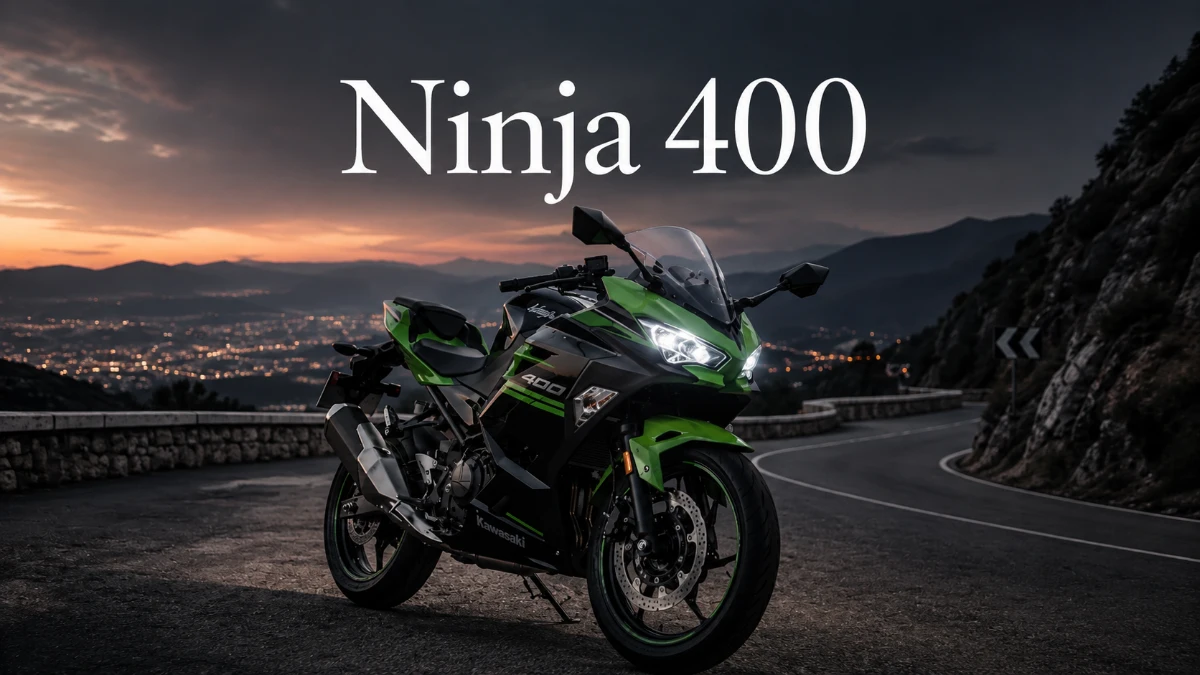
Kawasaki Ninja 400: Specs, Reliability, Used Price and Buying Guide
The Kawasaki Ninja 400 remains a strong used sport-bike option for riders who want a smooth parallel-twin engine, manageable dimensions and fully faired styling. Since it is discontinued in India, the key question is whether a particular motorcycle has clean paperwork, credible service history, healthy consumables and a price that still makes sense against newer alternatives such as the Ninja 500 and Aprilia RS 457.
With a 399cc liquid-cooled twin-cylinder engine, 45 PS, 37 Nm, a six-speed gearbox, dual-channel ABS, a 785mm seat height and a 168kg kerb weight, it suits riders seeking an engaging weekend machine, a first premium twin-cylinder sport bike or a capable platform for track-day skill development.
Kawasaki Ninja 400 Specs
The Ninja 400 is a 399cc liquid-cooled parallel-twin sport bike that balances accessible performance with everyday rideability. Its lightweight chassis, predictable engine response and compact ergonomics make it less intimidating than larger supersport motorcycles while offering more refinement than many single-cylinder rivals.
| Specification | Kawasaki Ninja 400 |
| Engine | 399cc, liquid-cooled, parallel-twin, DOHC |
| Maximum power | 45 PS at 10,000 rpm |
| Maximum torque | 37 Nm at 8,000 rpm |
| Transmission | 6-speed manual |
| Fuel system | Electronic fuel injection |
| Clutch | Assist and slipper clutch |
| Frame | High-tensile steel trellis |
| Front suspension | 41mm telescopic fork |
| Rear suspension | Uni-Trak monoshock with preload adjustment |
| Front brake | 310mm petal disc |
| Rear brake | 220mm petal disc |
| Safety | Dual-channel ABS |
| Front tyre | 110/70 R17 |
| Rear tyre | 150/60 R17 |
| Kerb weight | 168kg |
| Seat height | 785mm |
| Fuel tank capacity | 14 litres |
| Ground clearance | 140mm |
Specifications can vary between markets and model years. Before buying a used example, confirm the exact motorcycle through its registration certificate, VIN, manufacturer plate and authorised service history.
Read more: Ninja 400
Engine, Gearbox and Slipper Clutch
The 399cc engine is a liquid-cooled, DOHC parallel twin with fuel injection and a six-speed transmission. It feels strongest through the mid- and upper-rev range but remains tractable enough for normal city and highway riding.
Its assist-and-slipper clutch is useful in everyday use and spirited riding. The assist mechanism reduces clutch-lever effort, while the slipper function helps limit rear-wheel instability during aggressive downshifts. It supports smoother riding but does not replace proper gear selection or braking technique.
Ninja 400 Top Speed and Performance
The Ninja 400 can reach roughly 169 km/h in favourable real-world conditions. Actual top speed depends on rider weight, weather, road surface, altitude, tyre health and motorcycle condition.
More useful than the headline speed is its real-road performance:
- Stronger highway overtakes than smaller single-cylinder sport bikes.
- Smooth cruising due to the parallel-twin engine layout.
- A six-speed gearbox that keeps the engine in its usable rev range.
- Predictable throttle response for riders upgrading from 150cc–300cc motorcycles.
- Enough performance for track-day learning without the demanding nature of a 600cc supersport.
Kawasaki Ninja 400 Model-Year Differences
The core Ninja 400 platform remained largely unchanged throughout its production run. For a used buyer, the motorcycle’s maintenance record, emissions version, accident history and current condition matter more than small graphic or colour updates.
2018–2020 Early Models
Early Ninja 400 models established the bike’s familiar formula: a 399cc parallel twin, steel trellis frame, six-speed gearbox, assist-and-slipper clutch and ABS-equipped variants.
When evaluating an early model, check service history closely. Look for original fairing panels, healthy tyres, correctly maintained chain and sprockets, clean cooling-system components and no signs of crash repair. A well-kept 2018 or 2019 example can still be a sensible purchase.
2021–2022 India BS6 Models
The motorcycle returned to India in BS6 specification during 2022 after a period of absence from the domestic lineup. Buyers should verify whether a motorcycle is a BS4 or BS6 unit through its registration certificate, emissions documentation, VIN details and authorised dealer records.
A BS6 example may appeal to buyers who want a newer registration-year motorcycle. However, a mechanically sound earlier model with complete documentation can be a better purchase than a newer bike with neglected servicing or accident damage.
2023–2024 Later Listings
Later India listings continued with the established 399cc platform, with no fundamental change to the engine, frame or overall character. Colour schemes and graphics could vary by model year and market.
Do not use fairing colour alone to identify a model year. Panels may have been repainted or changed after a fall. The registration certificate, invoice, VIN, manufacturer plate and service records are more reliable indicators.
Which Model Year Is Best?
There is no single best model year. The best Ninja 400 is usually the one with:
- Complete service invoices and verifiable ownership.
- Clear registration, insurance and finance status.
- Original panels or professionally repaired bodywork.
- Good tyres, brakes, battery and chain-and-sprocket condition.
- A clean cold start with no warning lights.
- No overheating, coolant leaks or abnormal engine noise.
- Nearby Kawasaki service support.
- A total ownership cost that remains sensible against newer alternatives.
Reliability and Common Ownership Issues
The Ninja 400 uses a modern, liquid-cooled parallel-twin layout that can provide dependable service when maintained on schedule. Reliability is best judged by the condition of the individual motorcycle rather than assumptions based on its badge, odometer reading or model year.
There is no fixed engine-life figure that applies to every example. Engine longevity depends on oil-service discipline, cooling-system health, air filtration, correct warm-up habits, riding style, accident history and the quality of previous repairs.
What to Check Before Buying
| Area | What to Check | Why It Matters |
| Engine | Cold start, idle quality, smoke, leaks and abnormal noise | Can reveal neglect or expensive mechanical concerns |
| Cooling system | Radiator, cooling fan, hoses, coolant level and temperature behaviour | Overheating can cause major engine damage |
| Clutch and gearbox | Lever feel, gear shifts, clutch engagement and false neutrals | Hard use or missed maintenance affects rideability |
| Electrical system | Battery, charging, lights, switchgear and ABS warning lamp | Electrical repairs can be difficult to diagnose |
| Suspension | Fork-seal leaks, rear shock action and steering-head play | Worn parts affect safety and handling |
| Chain and sprockets | Rust, tight spots, slack and hooked teeth | Shows maintenance quality and likely replacement cost |
| Brakes | Pad thickness, disc condition and ABS function | Essential for safe riding and ownership planning |
| Fairings and mounts | Cracked tabs, mismatched paint, panel gaps and missing fasteners | Can reveal previous crashes or poor repairs |
A 30,000km motorcycle is not automatically a poor choice. At this mileage, ask for evidence of scheduled servicing and inspect valve-clearance history, coolant replacement, drivetrain wear, suspension condition, brake health and tyre age. A documented, well-maintained high-mileage example can be a safer choice than a low-kilometre motorcycle with no records.
Kawasaki Ninja 400 Maintenance Schedule
Always follow the owner’s manual for the exact motorcycle, because service requirements can vary by market and usage. Frequent city traffic, dust, rain, short trips and aggressive riding can require more frequent attention than a standard schedule suggests.
| Maintenance Item | Practical Timing | Ownership Priority |
| Engine oil and filter | At the scheduled service interval | Keep dated invoices and verify the correct oil grade |
| Drive chain | Clean, lubricate and inspect regularly; more often in rain or dust | Replace if tight spots, corrosion or excessive wear appear |
| Brake pads and discs | Inspect at each service and before purchase | Replace according to wear, not age alone |
| Brake fluid | Replace at the scheduled time interval | Old fluid can reduce braking consistency |
| Coolant | Check regularly and replace according to schedule | Watch for leaks, contamination or overheating |
| Air filter | Inspect and replace as required | Dusty riding may shorten replacement intervals |
| Spark plugs | Inspect or replace at the scheduled interval | Confirm replacement through service records |
| Valve clearance | Check according to the scheduled mileage | Important on higher-mileage motorcycles |
| Fuel hoses | Inspect periodically and replace if aged or damaged | Prevents leaks and fuel-delivery issues |
A maintenance chart is a planning tool, not a reason to ignore visible faults. A leaking fork seal, worn tyre, contaminated coolant, damaged brake disc or rough chain needs attention immediately.
Ninja 400 Mileage and One-Year Ownership Planning
The Ninja 400’s real-world mileage depends on traffic, throttle use, road speed, maintenance, tyre pressure and rider load. A practical expectation is often in the mid-20 km/l range, although a specific bike may deliver more or less depending on how and where it is ridden.
Running costs are higher than for a typical commuter motorcycle because this is a premium, liquid-cooled twin-cylinder sport bike with wider tyres, bodywork and potentially higher service and insurance costs.
| Cost Area | What Changes the Cost | Smart Planning Approach |
| Fuel | Distance ridden, traffic, speed and fuel price | Calculate based on your expected monthly usage |
| Routine servicing | Labour rate, filters, oil and workshop choice | Obtain a written estimate before purchase |
| Tyres | Compound, road conditions, riding style and age | Budget for replacement rather than delaying worn tyres |
| Chain and sprockets | Cleaning, lubrication, adjustment and rain exposure | Inspect at purchase and reserve funds if wear is visible |
| Insurance | City, IDV, policy type, rider profile and claims | Obtain a current premium quote before committing |
| Consumables | Brake pads, fluids, battery and filters | Maintain an annual reserve |
| Repairs | Crash history, fairing damage, electrical issues and parts availability | Do not spend the entire budget on the purchase price |
For example, a ₹3 lakh used motorcycle may appear affordable, but it becomes less attractive if it immediately needs tyres, chain and sprockets, brake pads, battery, fluid replacement, insurance renewal and accident-related repairs. The purchase decision should be based on the total first-year cost, not the asking price alone.
Rider Fit, Commuting and Touring
The 785mm seat height and 168kg kerb weight make the Ninja 400 approachable for many riders, but comfort depends on inseam, riding confidence, footwear and the ability to manage the motorcycle at walking speed.
Short Riders
Many shorter riders can manage the motorcycle because it is relatively narrow around the tank. Sit on the bike before buying, practise one-foot stops and consider how easily you can reverse it or hold it on an uneven road.
Lowering modifications can affect handling and ground clearance. Improve riding technique, footwear and confidence before considering suspension changes.
Tall Riders
Taller riders may be comfortable for regular rides, but knee angle and wrist pressure can become more noticeable over long distances. A meaningful test ride is more useful than judging comfort from a showroom sit.
Daily City Commuting
The Ninja 400 can be used daily, but it is not the easiest urban commuter. Stop-start traffic can bring engine heat, wrist load, limited luggage capacity and greater concern about fairing damage in crowded parking areas.
It works best for riders whose commute is moderate and who also want a motorcycle for weekend rides. If most riding happens in dense traffic, a lighter naked bike or commuter may be more practical.
Highway and Touring Use
Its fairing and smooth twin-cylinder engine make it more comfortable on highways than many small naked or single-cylinder motorcycles. The 14-litre fuel tank offers usable range, but riders should plan luggage, hydration, rest stops and fuel breaks.
It can handle weekend touring and short-to-medium solo trips well. Pillion comfort is adequate for short rides, but it is not the ideal choice for frequent long-distance two-up travel.
Ninja 400 vs Ninja 500
The Ninja 500 is the natural current alternative. It uses a 451cc parallel-twin engine with similar peak power but stronger torque delivered lower in the rev range. That makes it feel more effortless during overtakes and ordinary road riding.
| Specification | Ninja 400 | Ninja 500 |
| Engine | 399cc parallel twin | 451cc parallel twin |
| Power | 45 PS at 10,000 rpm | 45.4 PS at 9,000 rpm |
| Torque | 37 Nm at 8,000 rpm | 42.6 Nm at 6,000 rpm |
| Transmission | 6-speed | 6-speed |
| Seat height | 785mm | 785mm |
| Fuel tank | 14 litres | 14 litres |
| Kerb weight | 168kg | 171kg |
| India status | Discontinued | Current model |
Choose the used Ninja 400 if it has a verified history and provides meaningful savings after insurance, inspection and first-year maintenance. Choose the Ninja 500 if you want a current motorcycle, warranty support, stronger mid-range torque and potentially simpler long-term parts support.
Ninja 400 vs KTM RC 390
The Ninja 400 and KTM RC 390 serve different preferences. The Kawasaki focuses on the smooth, linear character of a parallel twin, while the RC 390 appeals to riders who want a sharper, more aggressive single-cylinder sport-bike experience.
| Buying Factor | Ninja 400 | KTM RC 390 |
| Engine layout | 399cc parallel twin | Single cylinder |
| Character | Smooth, linear, high-revving | Punchy, immediate and more intense |
| Best for | Highway use and engine refinement | Sport-focused riders seeking sharper response |
| Used-bike focus | Cooling, bodywork, chain and service history | Cooling, electronics, engine health and service history |
| Practical decision | Better for twin-cylinder smoothness | Better for a more focused single-cylinder feel |
A test ride matters more than a specification sheet. Riders who value highway composure and smoothness may prefer the Kawasaki. Riders seeking a more aggressive track-oriented feel may prefer the RC 390.
Ninja 400 vs Yamaha R3
The Yamaha R3 is another parallel-twin sport-bike alternative. Its smaller 321cc engine produces less torque than the Kawasaki, while its overall character remains smooth, approachable and sport-oriented.
| Specification | Ninja 400 | Yamaha R3 |
| Engine capacity | 399cc | 321cc |
| Engine layout | Parallel twin | Parallel twin |
| Power | 45 PS | Around 42 PS |
| Torque | 37 Nm | Around 29.5 Nm |
| Transmission | 6-speed | 6-speed |
| Main advantage | Stronger torque and overtaking response | Yamaha styling, brand preference or local availability |
The Ninja 400’s extra displacement and torque can make it feel more relaxed during overtakes and when carrying a pillion. The R3 may still be the better choice if its pricing, service access, condition or ergonomics suit the rider more closely.
Ninja 400 vs Aprilia RS 457
The Aprilia RS 457 is a newer twin-cylinder sport-bike alternative with a 457cc engine and a more current feature package. It appeals to riders who want a new motorcycle, warranty support and modern equipment rather than a discontinued used model.
| Buying Factor | Ninja 400 | Aprilia RS 457 |
| Engine | 399cc parallel twin | 457cc parallel twin |
| Power | 45 PS | Around 47 hp |
| Transmission | 6-speed | 6-speed |
| Purchase route | Used only in India | New or used, depending on availability |
| Main strength | Used-bike value when condition is excellent | Newer platform and current-market ownership |
The Aprilia makes sense for riders who want a fresh purchase and current product support. The Kawasaki makes sense when its used price leaves adequate budget for maintenance, insurance, tyres and unexpected repairs.
Dealer vs Private Seller
A dealer purchase can offer a more formal transaction, paperwork assistance and finance options. It does not replace an independent inspection.
A private seller may provide a clearer ownership story and more room for negotiation. However, documents, accident history and claimed servicing need closer verification.
| Purchase Route | Potential Benefit | Main Risk | Essential Step |
| Authorised dealer | More structured process and service access | Limited used stock and higher pricing | Request inspection and written terms |
| Used-bike dealer | More motorcycles to compare | Variable preparation standards | Verify all documents independently |
| Private seller | Direct owner history and negotiation | Missing records or concealed issues | Inspect at a trusted workshop before payment |
Never transfer money solely based on photographs, videos or a verbal “excellent condition” claim. Confirm the RC, VIN, engine and chassis numbers, insurance status, seller identity and transfer process first.
10-Step Used Ninja 400 Inspection Checklist
A structured inspection helps identify expensive issues before payment.
- Verify ownership and RC details. Match the seller’s identity, registration certificate, engine number and chassis number.
- Confirm the VIN and model specification. Use the VIN, RC and dealer records to identify model year, emissions version and service information.
- Review service history. Ask for invoices covering scheduled servicing, oil, filters, tyres, brakes, coolant, chain work and repairs.
- Inspect for crash evidence. Check fairing tabs, panel gaps, engine covers, bar ends, footpegs, mirrors, forks and handlebar stops.
- Start the engine cold. Look for difficult starting, warning lights, smoke, oil leaks, unstable idle and unusual mechanical noise.
- Check the cooling system. Inspect the radiator, hoses and coolant area. Allow the engine to warm up and confirm the fan operates normally.
- Assess suspension, steering and wheels. Look for fork-seal leaks, steering-head notchiness, damaged rims and uneven tyre wear.
- Inspect brakes and drivetrain. Examine pads, discs, ABS warning light, chain slack, tight spots and sprocket teeth.
- Take a proper test ride. Check clutch action, gearbox shifts, throttle response, straight-line stability, brake feel and abnormal vibration.
- Use findings to decide or negotiate. Obtain an estimate for all required work. If major concerns remain unresolved, walk away rather than negotiating against uncertainty.
Who Should Buy the Ninja 400?
| Rider Profile | Is It a Good Fit? | Why |
| Beginner with training | Yes, with restraint | Manageable size, ABS and predictable power delivery |
| Rider upgrading from 150cc–300cc | Yes | Noticeable performance and twin-cylinder refinement |
| Daily city commuter | Conditional | Capable but less practical in dense traffic |
| Weekend highway rider | Yes | Fairing and engine smoothness work well |
| Touring-focused rider | Conditional | Suitable for short-to-medium solo trips |
| Track-day learner | Yes | Balanced handling and manageable performance |
| Budget-first buyer | Conditional | Must leave money for maintenance and insurance |
| Buyer wanting a new warranty | No | A current model such as the Ninja 500 may suit better |
Frequently Asked Questions
Is the Kawasaki Ninja 400 worth buying in 2026?
The Ninja 400 is worth considering in 2026 when it is mechanically healthy, correctly documented and priced well below a new alternative after allowing for insurance, servicing, tyres and repairs. It remains enjoyable because of its smooth twin-cylinder engine, manageable size and balanced sport-bike character. Avoid buying solely because the asking price seems low; deferred maintenance can remove any initial saving.
Is ABS standard on the Ninja 400 in India?
India-spec Ninja 400 models were sold with dual-channel ABS. Still, confirm the equipment on the individual motorcycle through its physical ABS hardware, instrument warning light, registration details and service history. Imported units or motorcycles with modified components may differ, so verify rather than assume.
Is the Ninja 400 expensive to maintain?
It costs more to maintain than a basic commuter because it uses a liquid-cooled parallel-twin engine, premium tyres, body panels and specialist parts. The actual cost depends on the bike’s condition, workshop labour rate, annual distance and riding style. Budget for routine service, tyres, chain care, brake wear, insurance and a contingency fund. A well-maintained example is usually cheaper to own than a low-priced but neglected motorcycle.
Are Kawasaki Ninja 400 spare parts difficult to source?
Availability can differ by city, dealer stock and the part required. Routine service items are usually easier to plan for than model-specific fairing panels, electrical parts or imported components. Since the Ninja 400 is discontinued in India, ask a nearby Kawasaki service centre about parts ordering, expected lead times and workshop support before purchasing—especially if you live outside a major city.
Is 30,000 km too much for a used Ninja 400?
No. Thirty thousand kilometres is not automatically excessive if the motorcycle has evidence of regular service, healthy cooling components, correct drivetrain maintenance and no accident-related damage. At this mileage, inspect valve-clearance history, suspension, steering bearings, brake discs, tyres, battery and chain-and-sprocket condition. Maintenance quality is more important than the odometer figure alone.
Which Ninja 400 model year should I buy?
Prioritise condition and documentation over registration year. A later BS6 model can be appealing, but an earlier motorcycle with complete invoices, original panels, good tyres and no crash damage can be better value. Check the VIN, RC, insurance history and authorised service records before finalising the purchase.
Can beginners tour on a Ninja 400?
A trained beginner can tour on the Ninja 400 if they build up gradually and use appropriate riding gear. The fairing and twin-cylinder engine make highway riding easier than on many small naked motorcycles. However, it is still a sport bike, not a dedicated tourer, so plan luggage carefully, take regular breaks and assess pillion comfort before attempting long two-up journeys.
How long can a Ninja 400 engine last?
There is no dependable fixed kilometre figure. Engine life depends on timely oil changes, cooling-system care, clean air filtration, correct warm-up, riding habits and the quality of previous repairs. Rather than focusing only on mileage, evaluate cold-start behaviour, idle quality, leaks, gearbox operation, cooling performance and documented service records. A qualified inspection is the best way to judge an individual motorcycle.
Should I buy a Ninja 400 from a dealer or private seller?
Both can be viable. A dealer may make paperwork and finance easier, while a private seller may offer a clearer ownership story and better negotiation. In either case, verify the RC, VIN, insurance status, service invoices and accident history. Arrange a pre-purchase inspection at a trusted motorcycle workshop before paying a token amount or transferring funds.
Is the Ninja 400 better than the Ninja 500?
The Ninja 500 is the stronger choice for buyers who want a current model, warranty support and more mid-range torque. Its 451cc engine offers more low- and mid-range response, which can make daily riding and overtakes feel easier. The Ninja 400 is the better choice only when a well-maintained used example delivers a meaningful total-cost saving and the buyer accepts the realities of discontinued-model ownership.


You May Also Like

Atmos Energy: Login, Bill Pay, Start or Stop Service, and Customer Support

PetSmart Grooming: Prices, Services, Appointments, Requirements