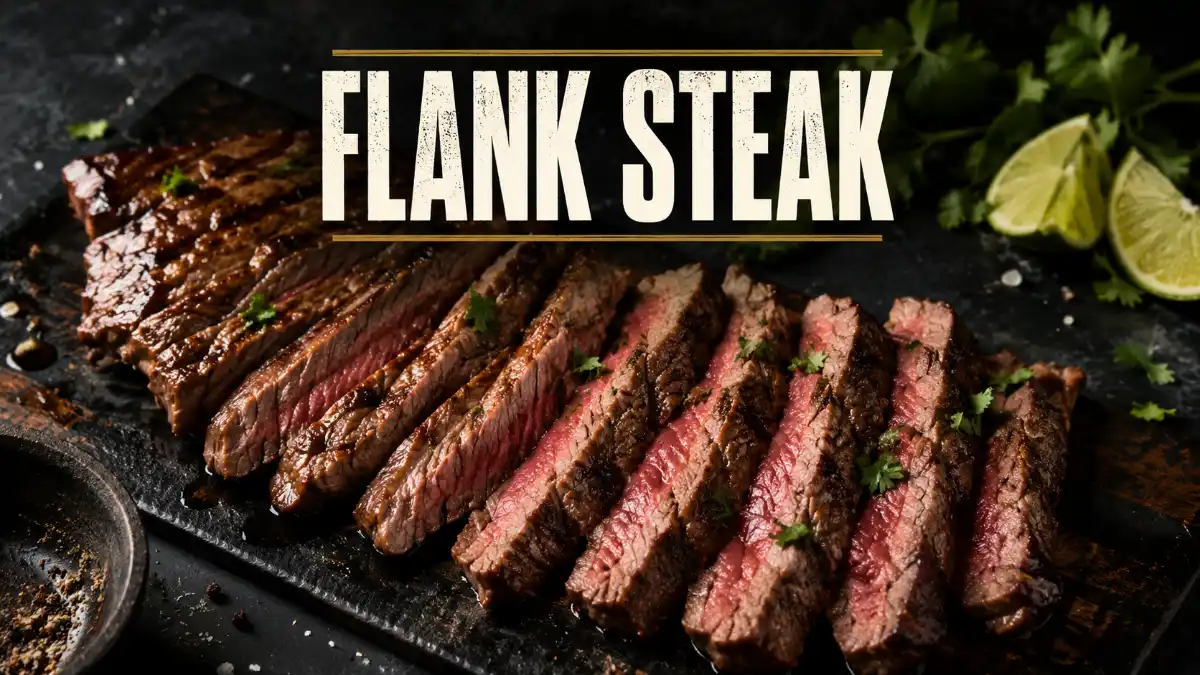
Flank steak is a lean, intensely beefy cut that cooks best quickly over high heat, then rests and is sliced thinly against the grain. It is ideal for grilling, broiling, or pan-searing and works especially well in fajitas, rice bowls, salads, sandwiches, and steak-and-vegetable dinners.
The reliable method is simple: season or marinate the steak, cook it whole on a hot surface, check it with an instant-read thermometer, rest it briefly, and cut perpendicular to its long muscle fibers. That final slicing step does more for tenderness than any marinade.
Where Flank Steak Comes From
Flank steak comes from the lower abdominal area, below the loin. It is boneless, comparatively lean, and made of hard-working muscle, which gives it a pronounced grain and rich flavor.
Its fibers run in long, visible lines, which is why thin slicing across—not along—the grain matters so much. It is broader and usually thicker than skirt steak, which is cut from the plate area and is typically narrower and more heavily marbled.
How to Choose the Best Flank Steak
Choose a steak with a deep red color, firm texture, and even thickness where possible. It may have a thin surface layer of fat and some silverskin, but it should not have large, hard deposits of fat or excessive liquid in the package.
- Weight: Plan on ⅓ to ½ pound raw steak per person, or about 1½ to 2 pounds for four people.
- Thickness: A steak around ¾ to 1 inch thick cooks more evenly and is easier to sear without overcooking.
- Marbling: Flank steak is naturally lean, so modest marbling is normal; do not expect the fat content of ribeye or skirt steak.
- Trim: Buy trimmed steak for convenience, or trim tough silverskin at home with a sharp knife.
- Labeling: Packages may say “beef flank,” “beef flank steak,” or, in some markets, “flank fillet.” “London broil” describes a preparation style or retail label and may refer to flank steak or another lean cut such as top round.
Fresh and previously frozen steak can both cook well. If buying previously frozen meat, thaw it safely in the refrigerator and pat it dry before cooking.
- Read more: Flank Steak
The Best Way to Cook Flank Steak
High heat creates the browned crust associated with the Maillard reaction before this lean cut loses too much moisture. Cook the steak whole whenever possible; cutting it into strips before grilling or searing exposes more surface area and makes overcooking more likely.
Simple Grilled Flank Steak Recipe
Serves: 4 to 6
Prep time: 15 minutes, plus 1 to 8 hours of marinating
Cook time: about 8 to 12 minutes
Ingredients
- 1½ to 2 pounds flank steak
- 2 tablespoons olive oil
- 3 tablespoons low-sodium soy sauce
- 1 tablespoon lime juice or red-wine vinegar
- 2 garlic cloves, finely grated or minced
- 1 teaspoon brown sugar or honey
- ½ teaspoon kosher salt
- ½ teaspoon black pepper
- Optional: ½ teaspoon cumin, smoked paprika, chili flakes, rosemary, or oregano
Method
- Whisk the oil, soy sauce, lime juice, garlic, sugar, salt, pepper, and optional seasonings.
- Add the steak, coat it in the marinade, cover, and refrigerate for 1 to 8 hours. Use shorter marinating times for mixtures heavy in citrus or vinegar.
- Heat a grill to high, or preheat a cast-iron skillet over medium-high to high heat. Remove excess marinade and pat the surface dry.
- Grill or sear for about 3 to 5 minutes per side, depending on thickness and heat. Check the thickest portion with an instant-read thermometer.
- Rest the steak for 5 to 10 minutes before slicing.
- Cut the steak into shorter sections if needed, rotate each section, and slice thinly across the visible fibers.
For stir-fries, slicing raw steak thinly across the grain is appropriate because the meat cooks in seconds. For fajitas, grilling or searing the steak whole and slicing afterward usually produces a juicier result.
Flank Steak Internal Temperature Guide
Use an instant-read thermometer rather than color or cooking time alone. For food safety, whole beef steaks should reach 145°F and rest for at least 3 minutes before eating.
| Doneness | Remove from heat around | Final temperature after resting |
| Medium-rare-style | 130–135°F | 135–140°F |
| Medium | 140–145°F | 145–150°F |
| Medium-well | 150–155°F | 155–160°F |
| Well-done | 160°F+ | 160°F+ |
The temperature can rise a few degrees after the steak leaves the heat; this is called carryover cooking. It is more pronounced in thicker steaks and is one reason to start checking temperature early. A medium finish is often the best compromise for flank steak because it retains more moisture than a medium-well or well-done steak.
Flank Steak Marinade Options
A marinade adds surface seasoning and helps build flavor, but it cannot replace proper cooking and slicing. Oil carries flavors, soy sauce or salt seasons the exterior, and a small amount of acid provides brightness.
- Garlic-herb: Olive oil, red-wine vinegar, garlic, rosemary, Dijon, salt, and pepper.
- Fajita-style: Lime juice, garlic, cumin, chili powder, oregano, and Worcestershire sauce.
- Asian-inspired: Soy sauce, sesame oil, ginger, garlic, rice vinegar, brown sugar, and chili flakes.
- Balsamic-rosemary: Balsamic vinegar, olive oil, garlic, rosemary, Dijon, and black pepper.
- Dry brine: Salt the steak 1 to 24 hours ahead, refrigerate it uncovered, then add pepper and other dry seasonings before cooking.
A wet marinade is useful when you want a specific flavor profile. Dry brining is the better choice when you want a deeply beef-forward result and a drier surface for browning.
Pan-Seared, Broiled, and Sous Vide Flank Steak
A grill is excellent, but it is not essential.
Pan-seared flank steak
Heat a cast-iron or heavy skillet until very hot, add a small amount of high-smoke-point oil, and sear the steak for 3 to 5 minutes per side. Do not crowd the pan or repeatedly move the steak.
Broiled flank steak
Place the steak on a broiler-safe pan 4 to 6 inches below a preheated broiler. Broil, turning once, and begin checking its temperature early because the steak cooks quickly.
Sous vide flank steak
Sous vide can produce even doneness, especially for a thicker steak. Cook the steak in a temperature-controlled water bath, dry it thoroughly, then finish with a very hot, brief sear. It is useful for precision, but generally less necessary than for thick cuts because flank steak cooks rapidly by conventional methods.
A reverse sear is usually unnecessary: flank steak is thin enough that the low-temperature stage adds time without a major benefit.
Flank Steak vs. Skirt Steak—and Other Substitutions
| Cut | Best use | How it differs from flank steak |
| Skirt steak | Fajitas, tacos, quick grilling | Thinner, narrower, and usually fattier |
| Bavette | Grilling and steak salads | Often similar in texture; may be sold as flap steak |
| Hanger steak | Fast searing, bistro-style steak | More tender and more deeply beefy |
| Flat iron steak | Grilling or pan-searing | Generally more tender and evenly thick |
| Top round | London broil-style preparation | Leaner, less tender, and best marinated and thinly sliced |
Skirt steak is the closest substitute for fajitas, though it can cook faster. Flat iron is a better choice when tenderness is the priority. Top round is economical but benefits from careful slicing and should not be treated as identical to flank steak.
Nutrition and Serving Size
Flank steak is a protein-rich, naturally carbohydrate-free beef cut. Exact nutrition varies by grade, trimming, portion size, and cooking method. A 3-ounce cooked serving of trimmed, broiled flank steak provides roughly 165 calories, 24 grams of protein, and 7 grams of fat.
| Approximate 3-ounce cooked serving | Amount |
| Calories | 165 |
| Protein | 24 g |
| Total fat | 7 g |
| Carbohydrates | 0 g |
Serve sliced steak with vegetables, beans, whole grains, or potatoes to turn it into a balanced meal. Marinades and sauces can substantially change sodium, sugar, and calorie content.
Storage, Freezing, and Meal Prep
Store raw flank steak in a refrigerator at 40°F or below and cook or freeze it within 3 to 5 days. Store cooked steak in a covered container and use it within 3 to 4 days. Refrigerate leftovers within 2 hours of cooking, or within 1 hour if the surrounding temperature is above 90°F.fsis.usda+1
| Storage | Refrigerator | Freezer |
| Raw flank steak | 3–5 days | 6–12 months for best quality |
| Cooked flank steak | 3–4 days | 2–3 months for best quality |
Freeze raw steak tightly wrapped or vacuum-sealed to limit freezer burn. For meal prep, cook the steak whole, cool it promptly, store it unsliced or in larger pieces when possible, and slice only what you plan to use. Reheat gently with a small splash of broth, sauce, or pan juices.
Common Flank Steak Mistakes
- Cooking it on a surface that is not hot enough to brown it quickly.
- Measuring doneness by color instead of temperature.
- Leaving sugary marinade on the surface, where it can burn before the steak cooks.
- Cutting thick slices or slicing in the same direction as the grain.
- Overcooking a lean cut until it becomes dry and firm.
- Reheating leftovers aggressively instead of warming them gently.
frequently asked questions
Flank steak can fit into many balanced eating patterns because it provides substantial protein and contains no carbohydrate on its own. It is leaner than heavily marbled cuts, although its nutrition varies with trimming, portion size, cooking fat, and sauces. A practical serving is about 3 to 4 ounces cooked, paired with vegetables and a fiber-rich side such as beans, corn, or whole grains. If monitoring sodium, use a lower-sodium marinade and season sauces separately.
Flank steak is often less expensive than premium steaks such as ribeye or tenderloin, but its price varies by region, retailer, supply, grading, and local demand. It has become popular for grilling, fajitas, and meal prep, so it is not always a bargain. Compare price by weight, account for trimming loss, and consider substitutions such as skirt steak, bavette, flat iron, or top round when purchasing based on a recipe rather than a specific cut.
Yes. Preheat the air fryer, lightly oil the steak, and cook it in a single layer, turning once. Because air-fryer capacity, airflow, steak thickness, and starting temperature vary, use a thermometer rather than relying on a fixed time. Rest the steak before slicing. An air fryer is practical for smaller pieces, but grilling or a cast-iron skillet usually produces a more pronounced crust on a full-sized steak.
It can, but slow cooking produces a different result from grilled or seared flank steak. Long, moist cooking can soften the meat for shredded beef, braises, or saucy dishes, but it will not retain a steak-like medium-rare center. If the goal is thin, tender slices for fajitas or salads, use high heat and brief cooking. If the goal is shreddable beef, use a braising liquid and cook until the meat pulls apart easily.
For the best browning and most even cooking, thaw it in the refrigerator before grilling, broiling, or pan-searing. A frozen steak releases moisture as it cooks, making it difficult to build a browned crust before the center changes texture. If time is limited, thaw it in cold water in a leakproof bag, changing the water regularly, then cook it promptly. Do not thaw raw beef on the counter.
Cooked flank steak keeps for 3 to 4 days in a refrigerator maintained at 40°F or below. Cool it promptly, store it in a shallow airtight container, and avoid leaving it at room temperature for more than 2 hours. For longer storage, freeze portions with their juices or sauce to help limit dryness. Reheat only until warmed through, or use cold slices in salads, wraps, and grain bowls.
Bright, herb-forward sauces balance flank steak’s rich beef flavor especially well. Chimichurri, salsa verde, garlic butter, romesco, horseradish cream, and a red-wine pan sauce are all strong choices. For fajita-style steak, use fresh salsa, avocado, grilled onions, or lime-cilantro sauce. Match the sauce to the marinade: a soy-ginger steak works well with scallions and chili crisp, while garlic-rosemary steak suits chimichurri or herb butter.
Flank steak can be smoked, but it is thin and lean, so use moderate heat and monitor it closely. Smoke it until it is nearly at the desired internal temperature, then finish over high heat or in a hot skillet to create a crust. Rest it briefly and slice thinly across the grain. Avoid extended smoking times intended for brisket or pork shoulder; flank steak does not need prolonged cooking to become tender.
Yes. Unlike grilling, stir-fry is one situation where it makes sense to slice raw flank steak before cooking. Chill the meat briefly for cleaner cutting, then cut very thin slices across the grain. Stir-fry in small batches over high heat so the pan stays hot and the beef browns instead of steaming. Add the steak back near the end if it needs to be combined with sauce, vegetables, noodles, or rice.
Flank steak contains long, noticeable muscle fibers. Slicing across those fibers shortens them, making each bite easier to chew; slicing with them leaves long strands that can seem tough even when the steak was cooked properly. Find the direction of the fibers before cooking, then cut the rested steak into manageable sections, rotate them, and make thin diagonal slices perpendicular to the grain. This technique is the essential finishing step for tender sliced flank steak.
