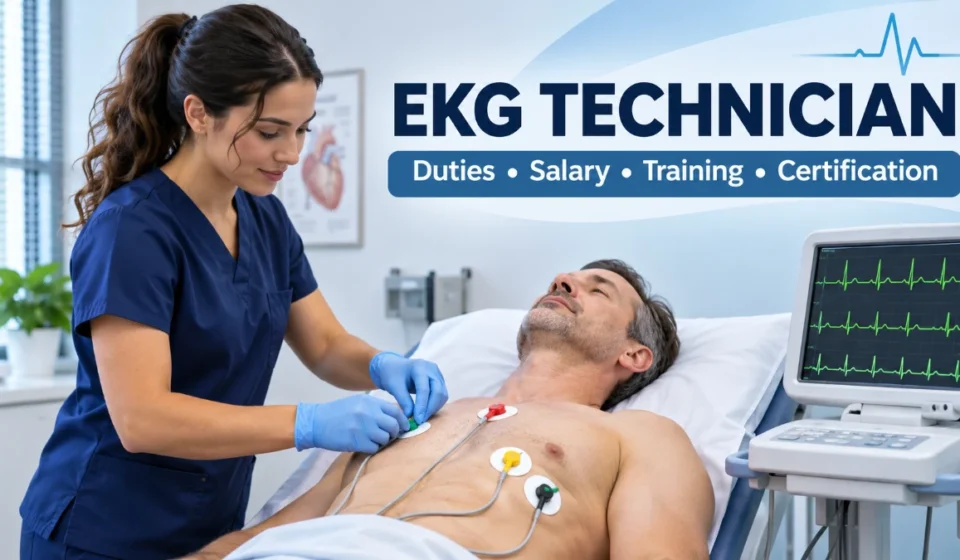

An EKG technician, also known as an electrocardiogram technician, is a healthcare professional who records the heart’s electrical activity to help doctors assess cardiac health. Their responsibilities include preparing patients, placing electrodes on the chest and limbs, performing 12-lead EKG tests, checking recording quality, and sending results to clinicians. While they play an important role in cardiac testing, EKG technicians do not independently diagnose heart conditions.
Becoming an EKG technician offers a relatively straightforward path into healthcare. Some employers hire applicants with a high school diploma or GED, while others prefer candidates with specialized training and professional certification. EKG-specific certificate programs generally take less than one year, making this an option for people interested in patient care without pursuing a four-year college degree.
What Does an EKG Technician Do?
An EKG technician uses specialized equipment to record the electrical signals that control each heartbeat. Doctors review these recordings to evaluate heart rhythm, electrical conduction, and possible abnormalities.
The electrocardiogram procedure involves attaching small electrodes to a patient’s skin. These sensors detect electrical signals, which the EKG machine displays as a recording that clinicians can examine.
Throughout a typical shift, technicians prepare patients, perform tests, maintain equipment, and communicate with other healthcare professionals.
Common EKG technician job duties include:
- Explaining the procedure and helping patients feel comfortable.
- Preparing the skin and positioning electrodes correctly.
- Performing standard 12-lead electrocardiograms.
- Recording heart activity and checking for technical errors.
- Troubleshooting poor signal quality caused by movement or interference.
- Cleaning equipment and following infection-control procedures.
- Documenting tests and forwarding recordings to clinicians.
- Reporting urgent concerns according to workplace protocols.
With additional training, some technicians also assist with exercise stress tests or ambulatory cardiac monitoring.
Technicians must recognize recording problems and follow procedures when a result requires urgent attention. However, interpreting EKG findings for diagnosis remains the responsibility of qualified clinicians.
How to Become an EKG Technician
There is no single nationwide pathway into this occupation. Education, certification preferences, and hiring requirements can differ depending on the state and employer.
1. Complete High School or Earn a GED
A high school diploma or equivalent is a common starting qualification. Classes in biology, anatomy, and health sciences can provide a useful foundation for understanding cardiovascular testing.
Some employers offer on-the-job training, although completing a specialized program may help applicants prepare for the responsibilities of the position.
2. Enroll in an EKG Technician Training Program
Community colleges, vocational schools, and healthcare training institutions offer programs designed for aspiring technicians.
Coursework typically includes cardiovascular anatomy, medical terminology, electrode placement, EKG procedures, patient safety, equipment operation, and clinical documentation.
EKG-specific certificate programs generally take less than one year. The actual duration depends on the institution, class schedule, and amount of practical training included.
Before enrolling, compare program costs, hands-on learning opportunities, and the qualifications required by employers in your area.
3. Gain Hands-On Experience
Practical training helps students become comfortable preparing patients, attaching electrodes, operating EKG equipment, and producing accurate recordings.
Look for a program that provides supervised practice with real patients or volunteers. If you plan to pursue CET certification, confirm that you can successfully perform and document at least 10 EKGs on live individuals.
This requirement matters because classroom instruction alone may not provide enough practical experience to qualify for certification.
4. Obtain EKG Technician Certification
Professional certification can strengthen your qualifications, especially when applying to employers that prefer certified candidates.
The National Healthcareer Association offers the Certified EKG Technician (CET) credential. Applicants must satisfy the relevant eligibility requirements, document practical EKG experience, and pass the certification examination.
Certification is not universally required for every EKG technician position, so check individual job descriptions before applying.
5. Apply for Entry-Level Positions
Hospitals, cardiology clinics, physician offices, and outpatient diagnostic facilities are common places to look for employment.
Job postings may use titles such as EKG technician, ECG technician, or cardiographic technician. Some positions involve additional cardiac monitoring duties, so carefully review the required skills, certifications, and experience.
EKG Technician Certification Requirements
The Certified EKG Technician (CET) credential demonstrates knowledge of electrocardiogram procedures, patient preparation, and safe testing practices.
Applicants generally qualify through one of two pathways:
| Eligibility pathway | Requirements |
| Education | Complete an EKG training or education program within the previous five years. Applicants generally need a high school diploma or equivalent, although eligible high school health science students scheduled to graduate within the next 18 months may qualify. |
| Work experience | Hold a high school diploma or equivalent and complete one year of supervised EKG work within the previous three years, or two years within the previous five years. |
Both pathways require evidence of successfully performing at least 10 EKGs on live individuals.
The CET examination covers relevant skills and knowledge, including patient preparation, cardiovascular fundamentals, EKG testing, safety procedures, and recording quality.
Professional certification and state licensing are not the same. Earning a CET credential does not replace any applicable licensing requirements, and employers may have additional hiring standards.
Before registering, review the current eligibility criteria and examination requirements to confirm that your education and experience qualify.
EKG Technician Salary in the United States
An EKG technician’s salary varies based on location, experience, employer, and job responsibilities.
According to the U.S. Bureau of Labor Statistics’ cardiovascular occupation data, the median annual wage for cardiovascular technologists and technicians was $74,310 in May 2025.
This figure represents the broader cardiovascular technology occupation, not EKG technicians alone. It includes professionals who perform more advanced diagnostic procedures and may have additional qualifications.
Someone entering the field to perform routine electrocardiograms should therefore not assume that $74,310 represents a typical starting salary.
Several factors can influence earnings:
- Location: Pay varies between states, cities, and regional healthcare markets.
- Experience: Technicians with more clinical experience may qualify for better-paying positions.
- Employer: Hospitals, cardiology practices, and outpatient facilities may offer different compensation packages.
- Additional skills: Training in specialized cardiac monitoring or diagnostic procedures may improve employment options.
- Work schedule: Some employers provide additional pay for evening, overnight, or weekend shifts.
For a more realistic estimate, compare current job listings specifically advertising EKG technician positions in the area where you want to work.
Where Do EKG Technicians Work?
EKG technicians work in healthcare settings where physicians need reliable recordings of patients’ heart activity.
Hospitals: Technicians perform EKGs for hospitalized patients and people undergoing diagnostic evaluations. Depending on the department, shifts may include evenings, nights, or weekends.
Cardiology clinics: Specialists use EKG recordings during cardiac consultations, routine evaluations, and follow-up appointments.
Physician offices: Technicians may conduct scheduled electrocardiograms as part of regular patient visits.
Outpatient diagnostic centers: These facilities provide cardiac testing without requiring patients to stay overnight.
Most positions involve frequent patient interaction. Technicians may spend much of their shift standing, moving between examination rooms, and helping patients prepare for testing.

Essential EKG Technician Skills
Technical ability matters, but patient communication and attention to detail are just as important.
| Skill | Why it matters |
| Electrode placement | Helps produce accurate electrical recordings |
| Attention to detail | Reduces errors that could affect test quality |
| Patient communication | Helps patients understand procedures and feel comfortable |
| Equipment operation | Supports reliable testing and troubleshooting |
| Infection control | Protects patients and maintains workplace safety |
| Documentation | Ensures recordings and patient information reach the appropriate clinical team |
Technicians also need to remain calm when assisting patients who feel anxious or uncomfortable.
An understanding of electrocardiogram testing and its clinical purpose helps technicians appreciate why accurate electrode placement, clear recordings, and timely communication matter.
EKG Technician Job Outlook and Career Growth
Employment of cardiovascular technologists and technicians is projected to grow 4% from 2025 to 2035, approximately as fast as the average for all occupations.
This projection applies to the broader cardiovascular technology workforce rather than EKG technicians alone.
Actual opportunities depend on local healthcare demand, employer requirements, and an applicant’s qualifications.
With additional education or specialized training, technicians may move toward cardiac monitoring, advanced cardiovascular diagnostic testing, or other allied healthcare occupations.
These roles often require qualifications beyond introductory EKG training, so career advancement usually involves further study or practical experience.
Is Becoming an EKG Technician Worth It?
This career may be a good fit for people who enjoy working with patients, following clinical procedures, and using medical technology.
One advantage is the relatively short training pathway compared with many other healthcare professions. The role also offers opportunities to gain practical experience and develop skills that may support future cardiovascular healthcare careers.
However, the work comes with real responsibilities. Technicians must produce accurate recordings, communicate effectively with patients, and follow safety procedures. Hospital positions may also involve irregular hours and physically demanding shifts.
Before committing to a program, compare tuition costs, clinical training opportunities, certification eligibility, and local job requirements. Completing training can prepare you for employment, but it does not guarantee a position.
Read also: Anthem BCBS: Health Insurance, Member Login, Plans & Benefits
Frequently Asked Questions
Can EKG technicians work night shifts?
Yes. Hospital-based EKG technicians may work evenings, overnight shifts, weekends, or holidays because cardiac testing can be needed at any time. Physician offices and outpatient clinics often offer more predictable daytime schedules.
Is the EKG technician certification exam difficult?
The exam can be challenging for candidates who are unfamiliar with cardiovascular terminology or EKG procedures. However, structured training, hands-on practice, and studying the official examination content can help you prepare. Difficulty varies based on your knowledge and experience.
Can EKG technicians advance to other healthcare careers?
Yes. EKG testing experience can provide a foundation for roles in cardiac monitoring, cardiovascular diagnostics, and related healthcare fields. Moving into more specialized positions generally requires additional education, training, or certification.