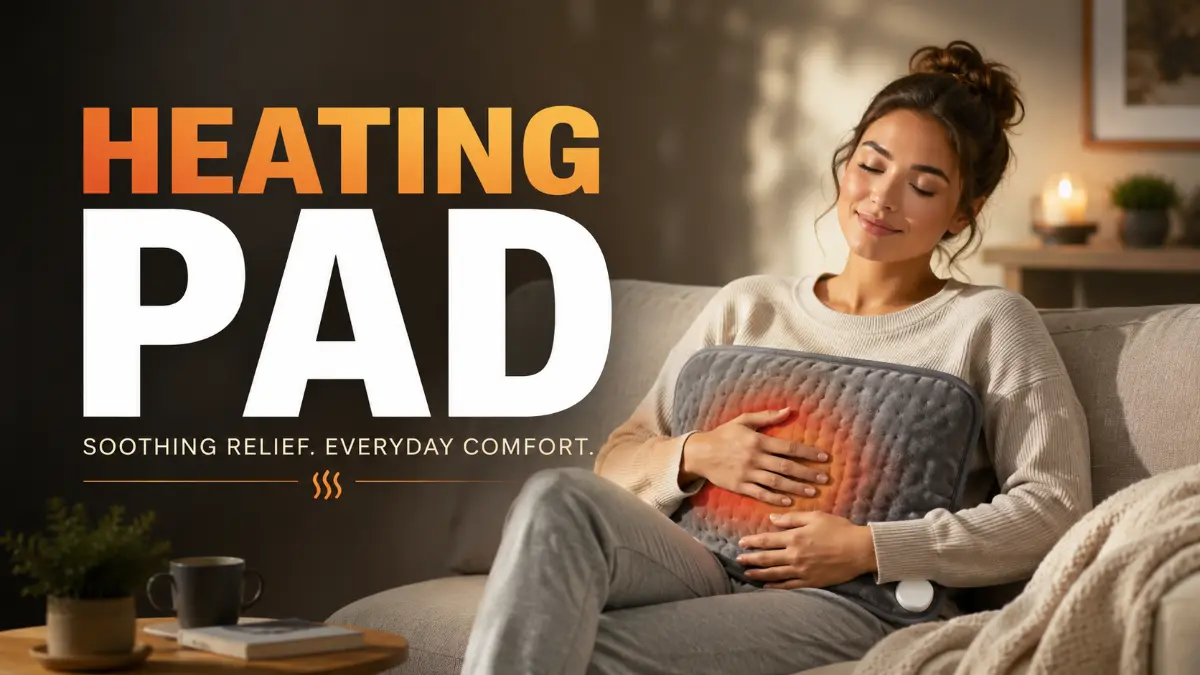
A heating pad may provide temporary relief for muscle stiffness, some acute or subacute low-back pain, and primary menstrual cramps. It is a comfort tool, not a diagnosis or treatment for persistent, severe, worsening, or unexplained pain.
For safer use, choose the lowest comfortable setting, follow the instructions for your specific product, check your skin regularly, and never sleep with a conventional electric pad. FDA safety information for certain electric heating pads advises limiting use to 15–20 minutes at a time; your device’s own instructions should always take priority.
Heating Pad Safety: Do and Don’t
Use heat only when you can monitor it and remove it easily. Temperature, session length, direct skin contact, pressure on the device, skin sensitivity, circulation, and the product’s condition all affect burn risk.
Do
- Use the lowest setting that feels comfortably warm.
- Follow the product’s instructions for approved body areas, duration, cleaning, and storage.
- Check your skin during use for pain, persistent redness, irritation, numbness, or blistering.
- Keep an electric pad flat and free from folds, punctures, pins, or heavy pressure.
- Unplug an electric device when it is not in use.
- Replace a heat product with a damaged cord, cover, plug, controller, seal, or heating surface.
- Stop if the warmth feels painful or symptoms get worse.
Don’t
- Do not sleep with a conventional electric heating pad.
- Do not sit or lie on an electric pad.
- Do not use a wet, damaged, or malfunctioning device.
- Do not apply direct heat to numb, broken, infected, blistered, or significantly irritated skin.
- Do not use heat to mask severe or unexplained pain.
- Do not assume instructions for a heat wrap, microwavable pack, or hot-water bottle apply to an electric pad.
- Do not use a heat product if you cannot remove it independently or reliably notice discomfort.
Electric heating pads can cause burns, electrical shocks, rashes, and irritation. FDA safety information for certain recalled devices advises users to inspect the product, begin at the lowest setting, avoid sleeping while using it, keep it away from water, and limit sessions to 15–20 minutes. These are useful safeguards, but they do not replace the directions supplied with your own device.
Read more: Heating Pad
Who should use extra caution?
Avoid direct heat on an affected area if it has reduced sensation, poor circulation, broken skin, active infection, or significant irritation. Reduced heat sensitivity and impaired circulation can make burns more difficult to detect early.
Ask a healthcare professional before frequent or prolonged use if you have diabetes with numbness or skin problems, peripheral vascular disease, a condition that affects sensation or alertness, cancer-related pain, or unexplained symptoms. Pregnancy does not automatically make all external heat unsafe, but the body area, temperature, duration, and reason for use matter; discuss regular or prolonged abdominal heat with a prenatal clinician.
What Heat Therapy Can Help With
Heat therapy applies external warmth to the skin and nearby tissue. It may reduce discomfort through sensory modulation, muscle relaxation, and changes in local blood flow. The effect is usually temporary, and the evidence differs by condition and by the type of heat intervention studied.
Evidence labels: “Supported” means clinical evidence exists for superficial heat or a defined heat intervention in the stated condition. “Conditionally supported” means professional guidance supports considering it, while recognising that benefit may be limited or variable. These labels do not mean every consumer product has been studied or will work equally well.
| Condition or goal | Evidence level | Role of heat | Important limitation |
| Acute or subacute nonradicular low-back pain | Supported for superficial heat or heat-wrap therapy | May offer modest, short-term pain and function improvement | It does not establish the cause of back pain |
| Primary menstrual cramps | Supported | May reduce pain and improve comfort | New, severe, or changing pelvic pain needs assessment |
| Hand, hip, or knee osteoarthritis | Conditionally supported | May be used as an adjunct for stiffness or discomfort | It is not a stand-alone treatment |
| General muscle stiffness | Common symptom-relief use | Gentle warmth may make movement more comfortable | Response depends on the cause of stiffness |
| Sciatica | Limited symptom-relief use | May temporarily ease surrounding muscle discomfort | It does not treat nerve irritation or compression |
| Fresh injury with significant swelling, bruising, or sharp pain | Context-dependent | Heat may not be the best first self-care option | There is no universal heat-versus-cold timetable |
| Numb or poorly circulated skin | Safety concern | Direct heat should not be self-managed without advice | Burn risk is higher |
Low-back pain
For acute or subacute nonradicular low-back pain, the American College of Physicians includes superficial heat among initial non-drug treatment options. A Cochrane review found that heat-wrap therapy may offer modest, short-term reductions in pain and disability for low-back pain lasting less than three months.
This does not mean every episode of back pain should be managed at home. Seek assessment when pain follows a substantial injury, is accompanied by fever or unexplained weight loss, or occurs with worsening weakness, numbness, or changes in bladder or bowel function.
Menstrual cramps
Heat therapy can be a useful non-drug option for primary dysmenorrhea, meaning menstrual cramps without an identified pelvic condition. A 2026 systematic review and meta-analysis of 57 randomized controlled trials involving 5,359 participants found that heat therapy likely reduced pain compared with no treatment and may provide relief comparable with NSAIDs in the included studies. Certainty varied across comparisons, so heat should be considered one symptom-relief option rather than a replacement for every treatment.
Talk with a clinician if cramps regularly interfere with work, school, sleep, or daily life; become progressively worse; or occur with unusually heavy bleeding or new symptoms.
Osteoarthritis and sciatica
For hand, hip, and knee osteoarthritis, the American College of Rheumatology and Arthritis Foundation conditionally recommend thermal modalities, including locally applied heat or cold. Heat may be worth trying for stiffness or discomfort alongside exercise, rehabilitation, medication review, and other appropriate care.
For sciatica, NHS guidance includes heat packs as one possible self-care measure for painful areas. This may help surrounding muscle tightness, but it does not treat the underlying nerve-related cause.
Which Heating Pad Is Best for You?
Choose the heat product that fits the treatment area, need for mobility, desired temperature control, and approved duration. Avoid products that would require you to fold, sit on, sleep on, or constantly reposition them.
| If you need… | Consider… | Why it may fit | Avoid it when… |
| Adjustable, consistent warmth at home | Electric heating pad | It offers controlled heat and broad coverage | You cannot supervise its use or may fall asleep with it |
| Heat for a large area, such as the back | Large electric pad | It can cover more surface area | It must be folded or placed underneath your body |
| Portability without electricity | Microwavable heat pack | It is convenient for short-term use away from an outlet | It develops hot spots or cannot be used with a barrier |
| Mobility during labeled extended wear | Wearable low-level heat wrap | It is designed to be worn while moving | You plan to exceed its labeled duration |
| Non-electric warmth for brief comfort | Hot-water bottle | It is simple and portable | It leaks, is damaged, or is filled with boiling water |
| Heat for a smaller curved area | Flexible heat pack | It may fit the neck, shoulder, or abdomen comfortably | It needs pressure to stay in place |
Electric heating pads
An electric pad may suit low-back discomfort, shoulder tension, or other larger areas when adjustable temperature is useful. Look for clear instructions, a reliable controller, a suitable size, and an automatic shutoff. Auto shutoff is a helpful safeguard, but it does not make sleeping with the device appropriate.
Microwavable packs and hot-water bottles
Microwavable packs are useful for portable, short-duration warmth. Follow the microwave instructions exactly, let the pack cool as directed, and test it before applying it to the skin. Hot-water bottles should be filled with warm—not boiling—water, checked for leaks, and used with a protective cover.
Wearable heat wraps
Wearable heat wraps may be useful if you want low-level warmth while walking, travelling, or working. Some are specifically labeled for extended wear. Their directions do not apply to standard electric pads, which should be used according to their own instructions.
How hot should it be?
There is no universal temperature that is appropriate for every product, body area, or person. A setting that is comfortable on the back may be too hot for thinner or more sensitive skin. Use the lowest comfortable setting rather than pursuing intense heat, and stop if warmth becomes painful or leaves persistent redness.
How to Use a Heating Pad Safely
Use the instructions for your specific product as the main guide. The following process supports safer use across most heat products.
- Inspect the product first. Do not use an electric device with a frayed cord, damaged cover, exposed wiring, faulty controller, or signs of overheating.
- Start gently. Begin at the lowest comfortable setting.
- Use the approved duration. FDA safety information for certain electric pads advises 15–20-minute sessions. A wearable wrap or microwavable pack may have different approved use times.
- Monitor your skin. Stop if you notice burning, persistent redness, irritation, numbness, or blistering.
- Avoid pressure. Do not sit, lie, or place heavy objects on an electric pad.
- Keep electricity and water apart. Do not use an electric device when wet or near water.
- Use only one heat source at a time. Avoid layering a heating device with hot topical products or another heat source unless advised by a clinician.
How often can you use heat?
Occasional use for familiar mild symptoms may be reasonable when the product is used correctly and does not irritate the skin. Repeated daily use is not automatically harmful, but pain that requires heat frequently to remain manageable deserves attention if it is persistent, recurring, worsening, or limiting normal activity.
If you depend on heat to sleep, work, walk, or carry out routine tasks, consider an assessment of the underlying problem instead of using a hotter setting or longer sessions.
Heat or cold for a new injury?
Avoid a rigid rule based only on the number of hours or days since an injury. Heat may feel useful for stiffness or muscle tension, while cold may feel more comfortable for some fresh injuries with swelling or bruising. Neither approach replaces assessment of a suspected fracture, dislocation, major sprain, or muscle tear.
For low-back pain, the Cochrane review found insufficient evidence to determine the effects of cold therapy or establish a clear heat-versus-cold answer. Use the approach that improves comfort without worsening symptoms, and seek advice when an injury is severe or unclear.
What to do after a burn
Remove the heat source and unplug an electric device if it is safe to do so. Cool the burn under cool running water for at least 20 minutes. Do not use ice, oils, butter, toothpaste, or creams. Remove nearby jewellery or loose clothing unless it is stuck to the skin, then cover the cooled area loosely with cling film or a clean, non-fluffy sterile dressing. Do not burst blisters.
Seek urgent medical evaluation after an electrical shock or electrical injury, even if the visible skin injury appears minor. Also seek urgent care for deep, large, blistered, white, brown, or charred burns, or burns affecting the face, hands, feet, genitals, buttocks, or a major joint.
When to Seek Medical Care
A heating pad can be part of self-care for mild, familiar discomfort. It should not delay care when symptoms may require diagnosis or urgent treatment.
Arrange a medical assessment for:
- Pain that is persistent, recurrent, progressively worsening, or affecting sleep, work, movement, or daily activities.
- Pain after a significant fall, collision, or other injury.
- Fever, spreading redness, unexplained weight loss, or signs of infection.
- Ongoing numbness, tingling, weakness, or pain that radiates down an arm or leg.
- Severe, unusual, or worsening abdominal or pelvic pain.
- Menstrual pain that becomes progressively worse, disrupts normal life, or occurs with unusually heavy bleeding.
Seek emergency assessment for back or leg pain with new difficulty starting urination, loss of bladder or bowel control, numbness around the genitals or anus, or severe and worsening weakness in both legs.
Frequently Asked Questions
Regular use may be reasonable when your skin sensation and circulation are normal, the product is used according to its instructions, and no irritation develops. Daily use itself does not prove there is a serious problem. However, if pain repeatedly requires heat to remain manageable or limits normal activity, sleep, or movement, it is worth discussing the underlying cause with a healthcare professional.
No. Do not sleep with a conventional electric heating pad because you may not notice excessive heat, prolonged pressure on the same area, or a malfunctioning device. FDA safety information for certain electric pads specifically warns against sleeping during use. If using a wearable heat wrap, follow its labeled instructions and avoid it on numb, damaged, or poorly circulated skin.
Follow the instructions for the exact product you are using. FDA safety information for certain electric heating pads advises 15–20 minutes at a time, but this should not be treated as a universal duration for all heat products. Heat wraps, microwavable packs, and hot-water bottles can have different use limits based on their temperature and design.
Diabetes can be associated with neuropathy, which may reduce the ability to feel excessive heat or pain. This makes burns easier to miss. If you have numbness, tingling, reduced sensation, circulation concerns, or skin changes, ask your healthcare team before applying direct heat to the affected area.
Heat may temporarily ease muscle discomfort around the lower back or buttock, and NHS guidance includes heat packs among self-care options for painful areas. It does not treat the nerve irritation or compression that can cause sciatica. Seek urgent help for bladder or bowel changes, numbness around the genitals or anus, or severe and worsening leg weakness.
Heat can feel comfortable when stiffness or muscle guarding is the main issue, but it is not always the right approach immediately after injury. Seek assessment instead of relying on heat if you felt a pop, cannot use the limb normally, have substantial bruising or swelling, or the pain is becoming worse.
Neither is universally better. Moist and dry heat differ in convenience, preparation, and personal comfort, but claims of superior “deep” treatment should not be treated as proof of better outcomes. Choose a heat source you can use safely at a comfortable temperature, without prolonged direct contact or pressure.
Yes, heat therapy can be a useful non-drug option for primary menstrual cramps. Evidence from systematic reviews indicates that it can reduce pain for many people. It should not be used to dismiss severe, new, progressively worsening, or unusual pelvic pain, especially when heavy bleeding or symptoms outside your usual menstrual pattern are present.
Use the lowest setting that feels comfortably warm. There is no single suitable temperature because burn risk depends on the product, body area, duration, direct contact, skin sensitivity, and pressure on the device. If warmth feels painful or causes persistent redness, reduce the setting or stop use.
Heat may provide temporary comfort for stiffness or muscle tension associated with chronic pain, but it does not replace diagnosis, rehabilitation, medication review, or condition-specific treatment. For osteoarthritis, locally applied thermal modalities are conditionally recommended as an adjunct to broader care. Consider professional advice if symptoms are changing or frequent heat is needed to function.
