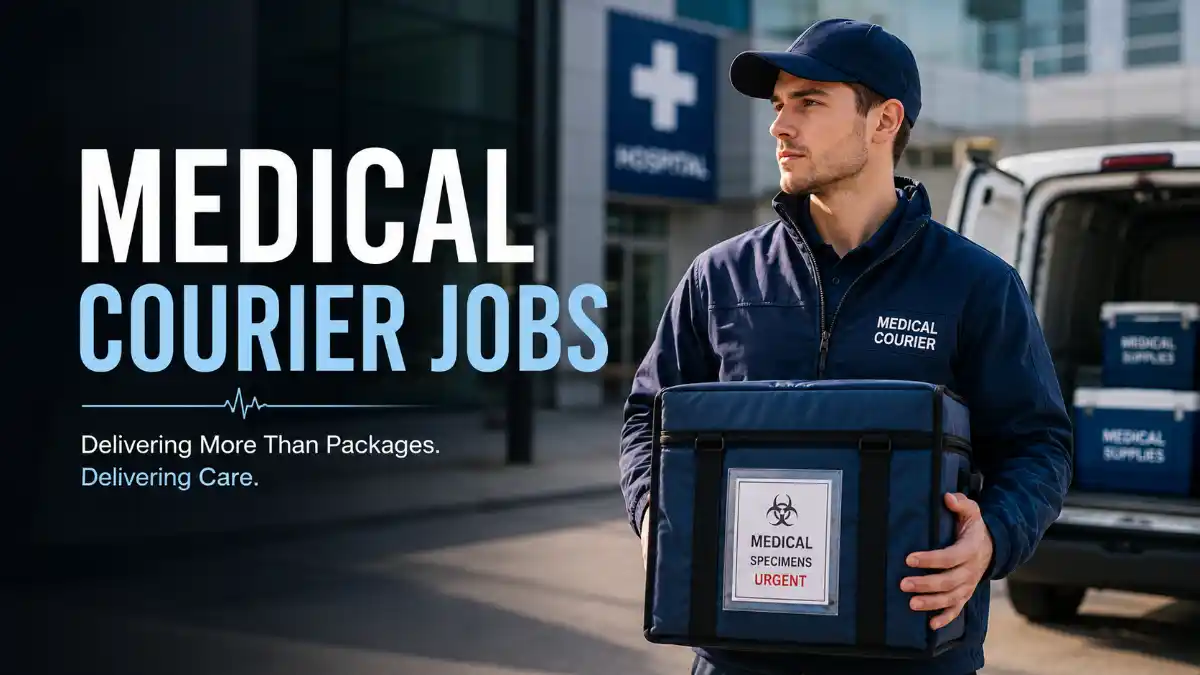
Explore medical courier jobs with great growth, flexible routes, and real impact on patient care. Learn duties, pay, and how to get hired fast.
Medical courier jobs involve transporting medical specimens, medications, equipment, and confidential records between hospitals, laboratories, clinics, pharmacies, and patients’ homes while following strict safety, temperature, and privacy rules. These roles sit at the intersection of healthcare and logistics, offering steady demand, relatively low formal entry barriers, and a practical pathway into broader medical logistics or healthcare operations careers.
What Is a Medical Courier?
A medical courier (also called a medical delivery driver) is responsible for picking up, securing, transporting, and delivering time-sensitive medical items under regulated conditions. Employers include hospitals, diagnostic and pathology laboratories, blood banks, home healthcare providers, and specialized healthcare logistics companies that depend on reliable couriers to keep clinical services running smoothly.
Key Responsibilities
Medical courier jobs blend driving, compliance, and documentation to protect patient safety and specimen integrity.
- Collect and deliver lab specimens, blood products, test samples, and medical records between clinics, hospitals, pathology labs, and reference laboratories according to set routes.
- Handle medications, vaccines, and other temperature-sensitive supplies following cold-chain logistics requirements, including use of insulated containers and temperature monitoring.
- Maintain chain of custody by labeling, sealing, scanning, and documenting each item, and verifying recipient identity at pickup and drop-off.
- Use courier management software, barcode scanners, and proof-of-delivery apps to track items and log timestamps.
- Follow infection-control and biohazard protocols when transporting potentially infectious materials, including proper packaging and spill procedures.
- Coordinate with dispatchers, lab staff, nurses, and pharmacists to prioritize urgent or stat deliveries.
- Read more: Medical Courier Jobs
Skills and Traits Employers Look For
Most employers prioritize reliability, safety, and attention to detail over formal academic credentials.
- Strong time management and route-planning skills to meet tight collection and delivery windows, often across multiple facilities.
- Meticulous record-keeping and comfort with mobile apps, scanners, and digital manifests for tracking and chain-of-custody documentation.
- Basic understanding of medical terminology and specimen types (e.g., blood, urine, biopsies) to interpret handling instructions and priority levels.
- Professionalism, confidentiality, and clear communication when interacting with clinical staff and patients.
- Safe driving habits, situational awareness, and the ability to work independently with minimal supervision.
Typical Requirements and Qualifications
Many medical courier jobs are entry level but governed by strict safety and compliance expectations.
- A valid driver’s license and clean driving record are almost always required; some employers run background checks and drug screens due to patient-safety and security rules.
- A high school diploma or equivalent is commonly required, while prior experience in delivery, logistics, or healthcare support roles is often preferred.
- Physical ability to lift and carry packages, navigate large hospital campuses, and occasionally handle heavier boxes or equipment.
- Willingness to work shifts, weekends, or on-call rotations, especially in hospital-based services that operate 24/7.
- In some regions and employers, familiarity with regulations related to transporting hazardous materials or medical waste is an advantage.
Work Environment and Schedules
Work settings and schedules vary depending on the type of medical courier job.
- Hospital-based couriers often follow fixed internal routes between departments, satellite clinics, and affiliated labs, with predictable shifts that may include nights and weekends.
- Third-party medical logistics companies and diagnostic labs typically run regional routes, where drivers collect and drop off at multiple facilities across a city or broader area.
- Positions may be full-time, part-time, per-diem, or independent contractor roles, offering varying degrees of schedule flexibility and benefits.
- Routes can range from dense urban circuits with frequent stops to longer regional or rural runs where planning around distance and traffic is critical.
Salary and Earning Potential
Pay for medical courier jobs varies by country, region, employer type, and whether you’re an employee or independent contractor.
- In many markets, hourly wages for medical couriers are comparable to or slightly higher than general delivery drivers because of added regulatory and safety responsibilities.
- Full-time employees at hospitals or large labs may receive stable salaries along with benefits such as health insurance, paid leave, and retirement contributions.
- Independent contractors may be paid per route, per stop, or per mile/kilometer, with earnings influenced by route volume, fuel costs, and vehicle expenses they must cover themselves.
- Earnings tend to increase with experience, efficient route management, and specialization in complex areas such as cold-chain vaccine logistics or high-volume lab courier routes.
- Local job boards and employer listings provide the most accurate current salary ranges for specific regions and roles.
Salary Factors and Employer Types
Several factors influence what a medical courier can earn over time.
- Employer type: Hospital and large health systems may offer more comprehensive benefits and slightly higher baseline pay than smaller clinics, while specialized logistics companies sometimes offer performance incentives.
- Location: Urban areas with dense healthcare networks often have more routes and higher wage competition; rural areas may pay differently but involve longer distances.
- Employee vs contractor: Employees receive wages and benefits but less control over schedule and routes; contractors can increase income through efficient route stacking but must manage their own taxes, insurance, and vehicle costs.
- Experience and reliability: Couriers who consistently meet timelines, maintain clean records, and handle complex assignments can become preferred drivers for high-priority routes.
Regulatory and Compliance Framework
Because medical couriers handle patient-related materials, their work is influenced by healthcare privacy and safety regulations.
- Privacy and confidentiality rules govern how documents and labels containing patient information are handled and secured, even for non-clinical staff.
- Occupational health and safety standards define how workers handle biohazardous materials, personal protective equipment, and incident reporting in case of spills or exposure.
- Laboratories and diagnostic facilities operate under accreditation and quality standards that include specimen transport requirements, so couriers must follow specified packaging and time limits.
- Transport rules for hazardous or regulated materials may apply in some jurisdictions when moving certain chemicals, medical waste, or controlled substances.
Technology and Tools Used
Modern medical courier jobs rely on technology to ensure accuracy, traceability, and efficiency.
- Route-optimization software helps plan daily runs to reduce delays and fuel usage, especially for regional networks with many stops.
- Mobile apps and handheld devices are used for barcode scanning, electronic signatures, proof of delivery, and real-time status updates.
- Temperature-monitoring devices and insulated containers help maintain cold-chain logistics for vaccines, certain lab specimens, and other temperature-sensitive items.
- Central dispatch systems and communication tools keep couriers updated about urgent pickups, route changes, or facility-specific instructions.
How to Get Started as a Medical Courier
Breaking into medical courier work is often a matter of combining basic driving qualifications with a healthcare-compliant mindset.
- Ensure you have a valid driver’s license and a clean driving record, and gather identity and address documentation often required during hiring.
- Gain practical experience in delivery, logistics, or entry-level healthcare support roles that demonstrate reliability, punctuality, and comfort with compliance procedures.
- Search for job postings from hospitals, pathology labs, blood banks, and medical logistics companies, paying attention to whether roles are employee-based or contractor positions.
- Highlight skills such as time management, safe driving, attention to detail, and familiarity with digital tools on your resume and in applications.
- Complete employer-provided training on specimen packaging, infection control, documentation, and privacy obligations before starting independent routes.
Vehicle and Equipment Requirements
Vehicle and equipment expectations vary by employer and contract type.
- Some hospital-based roles provide a fleet vehicle, while others require couriers to use their own cars, vans, or two-wheelers, especially in contractor arrangements.
- Employers may specify minimum vehicle standards, such as enclosed cargo space, appropriate insurance, and reliable maintenance history.
- Essential equipment can include insulated coolers, cold packs, specimen racks, secure lockboxes, barcode scanners, and personal protective equipment such as gloves and masks.
- Contractors typically bear responsibility for fuel, maintenance, and insurance, which should be factored into their income expectations.
Employee vs Contractor Roles
Medical courier jobs can be structured either as direct employment or independent contracting, each with trade-offs.
- Employee roles: Offer a salary or hourly wage, benefits, training, and more predictable schedules; in return, employers set routes, hours, and performance expectations.
- Contractor roles: Provide greater flexibility over routes and hours and potential to increase earnings with efficient routing, but require managing vehicle costs, insurance, taxes, and sometimes business registration.
- Choosing between the two depends on preferences for stability versus flexibility, willingness to manage business expenses, and local market opportunities.
Pros and Cons of Medical Courier Jobs
Like any career path, medical courier roles offer both advantages and challenges.
- Advantages: Low formal entry barriers, meaningful work supporting patient care, exposure to healthcare environments, and opportunities to transition into broader medical logistics or healthcare operations roles.
- Challenges: Time pressure, strict handling and documentation protocols, potential exposure to infectious materials, shift work that may include nights or weekends, and physical demands such as lifting and walking.
Example Day in the Life
A typical day for a medical courier might begin at a central hub, where they receive a route manifest and load sealed, labeled containers into their vehicle. Throughout the day, they travel to clinics, collection centers, and hospitals, scanning each specimen or package at pickup and delivery, updating their mobile app, and communicating with dispatch if delays or urgent additions arise. At the end of the shift, they return unused supplies, finalize digital logs, and prepare for the next day’s route.
Safety, Compliance, and Ethics
Ethics and safety are central to medical courier jobs because every item handled can affect a patient’s diagnosis or treatment.
- Couriers must follow biohazard and spill-response procedures to protect themselves, clinical staff, and the public, including proper use of protective equipment and timely incident reporting.
- Respecting patient privacy and confidentiality is essential when handling documents or labels that include personal health information.
- Adhering to chain-of-custody and documentation standards ensures test results and medications can be trusted, supporting accurate diagnoses and safe treatment decisions.
Future Trends in Medical Courier Work
The role of medical couriers is evolving alongside changes in healthcare delivery and technology.
- Growing use of home diagnostics and telehealth services increases the demand for reliable home-to-lab specimen transportation and last-mile medical logistics.
- Advances in route optimization, real-time tracking, and digital proof-of-delivery tools continue to improve efficiency and accountability.
- In some regions, organizations are experimenting with new technologies such as automated lockers or drone delivery for specific types of medical transport, while still relying on human couriers for most daily operations.
Frequently Asked Questions
Healthcare experience is helpful but not always required. Many employers hire candidates with strong driving records, reliability, and attention to detail, then provide training on specimen handling, infection control, and privacy rules. Experience in healthcare, laboratory settings, or medical office support can make your application stronger, but applicants from general courier, logistics, or delivery backgrounds often transition into these roles successfully.
Formal certifications are not universally required, but some employers value or provide training in topics such as biohazard handling, infection control, or hazardous materials awareness. In regulated environments, couriers may receive internal training on laboratory transport standards and privacy laws. Completing relevant short courses or safety training can demonstrate your commitment to compliance and improve your chances of being hired.
Many independent-contractor medical courier roles require you to use your own vehicle, while employee roles may offer company vehicles. If you use your own vehicle, you typically need valid registration, appropriate insurance, and a well-maintained car, van, or two-wheeler. Employers or contracting platforms may specify acceptable vehicle types and expect you to manage fuel, maintenance, and cleanliness to meet healthcare standards.
Medical courier jobs can be moderately physical. Couriers may need to lift and carry boxes, coolers, or equipment, walk through large hospital campuses, and navigate stairs or ramps. While individual items are often manageable in weight, the cumulative effect of repeated lifting and walking throughout a shift can be tiring. Good basic fitness, proper lifting techniques, and comfortable footwear help reduce strain and risk of injury.
Many organizations offer part-time, per-diem, or flexible shifts in addition to full-time roles. Hospitals and labs often need coverage during early mornings, evenings, or weekends, which can suit students or people seeking supplementary income. Independent contractor arrangements may allow you to accept routes that fit your schedule, although income can fluctuate based on demand and route availability in your area.
Training length varies by employer and the complexity of the routes. Some organizations provide a short onboarding period of a few days to cover route familiarization, software usage, and safety procedures. Others may extend training over several weeks, pairing new couriers with experienced staff for shadowing. Training typically focuses on specimen packaging rules, chain-of-custody documentation, infection control, and privacy obligations.
Minimum requirements often include a reliable vehicle, valid driver’s license, and appropriate insurance. Employers or contracting companies may supply insulated containers, barcode scanners, and protective equipment, or expect you to obtain them. You may also need a smartphone compatible with the courier management app, basic tools for organizing deliveries in your vehicle, and space to secure items safely during transport.
Stress levels can vary depending on route density, traffic conditions, and the urgency of deliveries. Time-sensitive specimens and medications add responsibility, and couriers must balance speed with safety and accuracy. Good route planning, familiarity with local roads, and clear communication with dispatch or lab staff can reduce stress. Many couriers find the work rewarding because they contribute directly to timely patient care.
Yes, medical courier experience can open doors to other roles in healthcare logistics, supply chain, or operations. Familiarity with hospital systems, laboratory workflows, and transport standards can help you move into positions such as logistics coordinator, lab assistant (with additional qualifications), supply chain technician, or operations supervisor. Building strong relationships with healthcare organizations can support this progression over time.
Medical courier roles can be either a full-time career or a side job, depending on your goals and local opportunities. Some people build long-term careers with hospitals or logistics companies, benefiting from stable income and advancement prospects. Others work as independent couriers or part-time employees alongside other commitments, using medical courier work as a flexible way to earn additional income while gaining exposure to the healthcare sector.