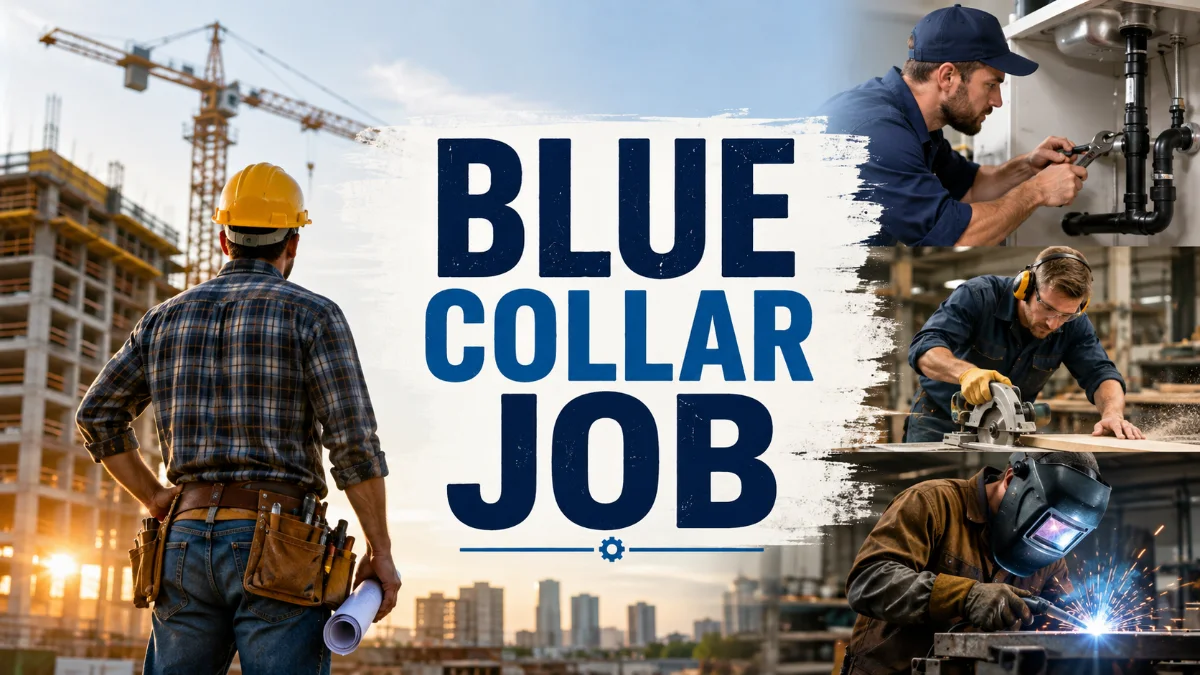
Blue Collar Job: The Complete Career Guide for Skilled Trade Workers
A blue collar job refers to any occupation centered on manual labor, physical skill, or hands-on technical work rather than office-based administrative or managerial duties. These roles span construction, manufacturing, transportation, energy, and skilled trades, and several now pay six-figure median salaries while requiring no four-year degree.
Understanding this career path matters more than ever. Skilled trade shortages have pushed wages up sharply in certain specialties, even as broader manufacturing and construction hiring has cooled since 2022. This guide explains what blue collar work actually involves, which industries offer it, how much you can realistically earn, and how it compares to white collar careers.
What Is a Blue Collar Job?
A blue collar job is manual or trade-based work that typically involves physical labor, technical skill, or operating equipment and machinery. The term originated from the durable blue work shirts once worn by factory and manual laborers to hide dirt and wear, distinguishing them from office workers who wore white dress shirts.
Blue collar jobs generally share a few defining traits:
- Hands-on work: tasks involve building, repairing, operating, or maintaining physical systems.
- Trade-specific training: many roles require apprenticeships, certifications, or vocational education rather than a bachelor’s degree.
- Hourly or wage-based pay: compensation is frequently tied to hours worked, though salaried and contract-based roles also exist.
- On-site presence: work often happens in workshops, construction sites, factories, warehouses, or outdoors rather than an office.
Common examples of blue collar workers include electricians, plumbers, welders, machinists, HVAC technicians, truck drivers, carpenters, and construction workers.
Major Blue Collar Industries
Skilled trade jobs aren’t limited to one sector. They span several major industries, each with distinct skill requirements and career paths.
Read more: Blue Collar Job
Construction and Skilled Trades
This is the largest blue collar category, covering electricians, plumbers, carpenters, masons, roofers, and HVAC technicians. Most roles here require formal apprenticeships combining paid on-the-job training with classroom instruction, typically lasting three to five years.
Manufacturing and Production
Machinists, welders, tool-and-die makers, and assembly line workers keep factories running. Modern manufacturing increasingly blends manual skill with computer-controlled machinery, so familiarity with CNC systems and industrial automation is becoming a valuable addition to traditional trade skills. Hiring in this sector has softened in recent years, so entry-level applicants should expect more competition than in prior hiring cycles.
Transportation and Logistics
Truck drivers, locomotive engineers, and warehouse material handlers move goods across supply chains. Commercial driving requires a Commercial Driver’s License (CDL), while warehouse roles often need less formal certification but reward physical stamina and equipment-handling skills.
Energy and Utilities
Electrical power-line workers, power plant operators, and oil rig workers maintain critical infrastructure. These jobs often involve higher risk and irregular hours but tend to pay well above the blue collar average because of the specialized safety training required and the essential nature of grid maintenance.
Maintenance and Repair Services
Auto mechanics, diesel technicians, and HVAC repair specialists fix and maintain equipment that businesses and households depend on daily. Demand in this category tends to stay comparatively stable because vehicles and climate systems always need servicing, regardless of broader economic conditions.
Skills Required for Blue Collar Careers
Technical proficiency comes first: reading blueprints, operating specialized tools, understanding electrical or mechanical systems, and following safety codes. Most trades require passing a licensing exam after completing an apprenticeship.
Physical stamina and dexterity matter because many roles involve standing, lifting, climbing, or working in tight spaces for extended periods.
Problem-solving under pressure is essential, since equipment failures or on-site issues often need quick, practical fixes without waiting for supervisor input.
Safety awareness is non-negotiable in industries like construction and energy, where OSHA compliance and proper use of protective equipment directly affect worker safety.
Basic digital literacy is increasingly relevant, as many trades now use tablets for work orders, diagnostic software for vehicle or HVAC repair, and computer-aided design tools for planning.
Salary Factors for Blue Collar Workers
Pay for a blue collar worker varies by trade specialization, geography, union status, experience level, and overtime availability rather than following one fixed pattern.
Trade specialization drives the biggest difference. General laborers earn far less than licensed electricians or elevator mechanics, since specialized skills carry a wage premium tied to training time and licensing requirements.
Geographic location shifts pay substantially. For electrical power-line installers, Washington state’s median wage of roughly $125,710 sits nearly $33,000 above the national median, while Oklahoma’s median of about $66,840 sits well below it — a difference of almost $59,000 for the same occupation.
Union membership often increases both wages and benefits, since unions negotiate standardized pay scales, overtime rules, and healthcare coverage on behalf of members.
Experience and certification level separate apprentices from journeymen and master tradespeople, with pay increasing at each stage of licensure.
Overtime and hazard pay can meaningfully boost annual income, particularly in energy, construction, and emergency-response trades where extra hours or dangerous conditions are compensated at higher rates.
Highest-Paying Blue Collar Jobs
| Occupation | National Median Annual Wage | Median Hourly Wage | Typical Entry Path |
| Elevator/escalator installer and repairer | $106,580 | $51.24 | Apprenticeship and license |
| Electrical power-line installer and repairer | $92,560–$95,320 | $44.50–$45.83 | Apprenticeship and safety training |
| Construction manager | $100,000–$120,000 | Varies | Field experience and certification |
| Power plant operator | $95,000–$99,000 | Varies | On-the-job training and license |
| Aircraft/avionics mechanic | $75,000–$79,000 | Varies | Trade school and FAA certification |
| Journeyman/master electrician | $75,000–$120,000 | Varies | 4–5 year apprenticeship |
Figures for elevator installers and power-line installers reflect current U.S. Bureau of Labor Statistics wage data; remaining figures reflect approximate industry-reported ranges and can vary by employer, region, and union status.
Education Pathways Into Blue Collar Work
Unlike most white collar professions, blue collar careers rarely require a bachelor’s degree. Instead, workers typically follow one of these routes:
- Apprenticeships: Paid, structured programs combining on-the-job training with classroom instruction, usually lasting three to five years and ending in a journeyman certification.
- Vocational or trade schools: Shorter, focused programs, often six months to two years, that teach specific technical skills such as welding, HVAC repair, or automotive technology.
- Community college certificate programs: Offer associate degrees or certifications in fields like industrial technology, often at a fraction of a four-year college’s cost.
- On-the-job training: Some entry-level roles, such as warehouse work or general labor, require minimal formal education, with skills built through direct experience.
- Military technical training: Many veterans transition into skilled trades using technical training received during military service.
This lower upfront education cost is one of the strongest draws of manual labor jobs and skilled trades alike, since workers can start earning income years before a traditional college graduate enters the workforce debt-free.
Career Growth in Blue Collar Fields
Blue collar careers offer clearer advancement paths than many people assume. A typical progression moves from apprentice to journeyman to master tradesperson, with pay and independence increasing at each stage.
Beyond hands-on trade work, experienced workers often move into supervisory or project management roles, overseeing crews and job sites. Others pursue specialized certifications in niche, higher-paying areas like industrial electrical systems or elevator mechanics, one of the few trades where median pay already exceeds $100,000. A significant number eventually start their own contracting businesses, since trade licenses and client relationships translate directly into self-employment opportunities.
Growth isn’t uniform across all blue collar careers, though. The Bureau of Labor Statistics projects roughly 5% employment growth for elevator and escalator installers through 2034, faster than the 3% average across all occupations, while broader manufacturing and construction hiring has actually declined in recent years, with job openings in some construction trades reverting to levels last seen around 2016. This means researching demand for a specific trade in your region matters more than assuming all blue collar work is booming equally.
Blue Collar vs. White Collar Jobs
The line between blue collar and white collar work has blurred in recent years, but core differences remain in how the work is structured and compensated.
| Factor | Blue Collar | White Collar |
| Nature of work | Manual labor, technical, hands-on | Administrative, managerial, analytical |
| Typical education | Apprenticeship, trade school, certification | Bachelor’s degree or higher |
| Pay structure | Often hourly or wage-based, plus overtime | Usually fixed salary |
| Work environment | Job sites, factories, outdoors, warehouses | Offices, remote, or hybrid settings |
| Career entry cost | Lower upfront cost, earn while training | Higher upfront cost (tuition, student loans) |
| Advancement path | Apprentice to journeyman to master or owner | Entry-level to management to executive |
| Job security drivers | Tied to construction cycles, trade-specific demand | Tied to corporate hiring, economic sectors |
Neither category is inherently better; the right choice depends on personal interests, tolerance for physical work, and financial priorities like avoiding student debt versus pursuing office-based career tracks.
Common Mistakes When Entering Blue Collar Careers
- Skipping apprenticeship research: Not all programs offer equal pay or training quality, so comparing union versus non-union apprenticeships matters.
- Underestimating licensing requirements: Many trades require passing state or municipal exams before working independently, and skipping this step can delay career progress.
- Ignoring safety training: Cutting corners on OSHA certifications or protective equipment increases injury risk and can limit job opportunities.
- Overlooking specialization: Staying a generalist longer than necessary can cap earning potential compared to workers who pursue in-demand certifications early.
- Assuming demand is uniform: Treating skilled trade jobs as one booming category ignores real differences; some trades like elevator repair are growing steadily, while broader manufacturing hiring has softened.
- Neglecting business skills: Tradespeople planning to eventually run their own contracting business benefit from learning basic bookkeeping and client management early on.
Frequently Asked Questions
Is a blue collar job a good career choice right now?
It depends heavily on the specific trade. Specialized, licensed roles like elevator installation and electrical line work continue to show steady demand and strong pay, with the elevator trade projected to grow about 5% through 2034. Broader manufacturing and general construction hiring has cooled noticeably since 2022, so researching demand in your target trade and region matters more than assuming all blue collar work is equally in demand.
Do blue collar jobs require a college degree?
No, most blue collar careers don’t require a four-year degree. Instead, they rely on apprenticeships, trade school certificates, or on-the-job training. Some roles, like construction management, may benefit from an associate degree, but the majority of skilled trades prioritize hands-on training and licensing over academic credentials.
Can blue collar workers earn more than white collar workers?
Yes, in specific cases. Elevator and escalator installers, for instance, earn a national median of $106,580 a year, which exceeds many entry- and mid-level white collar salaries. Earnings depend heavily on trade specialization, licensing, location, and union membership rather than collar type alone.
What is the fastest way to start a blue collar career?
Enrolling in an apprenticeship program is typically the fastest path, since it lets you earn wages immediately while training. Trade schools offer a quicker alternative for specific skills like welding or automotive repair, usually completing in six months to two years, followed by entry-level work while pursuing full certification.
Are blue collar jobs physically demanding for older workers?
Many are, though demands vary widely by trade. Roles like construction labor and roofing are more physically intensive, while trades like electrical work, HVAC diagnostics, or supervisory positions place less strain on the body as workers gain experience. Many tradespeople transition into training, inspection, or management roles later in their careers to reduce physical demands.
Do blue collar workers get benefits like healthcare and retirement plans?
It depends on the employer and union status. Unionized blue collar jobs typically include structured healthcare coverage, pension plans, and paid leave negotiated through collective bargaining. Non-union roles vary more, with benefits depending on the specific employer, though larger companies in construction, energy, and manufacturing increasingly offer competitive benefits packages to attract skilled workers.
What’s the difference between an apprentice and a journeyman?
An apprentice is in a structured training period, working under supervision while learning trade skills and completing required classroom hours, usually over three to five years. A journeyman has completed the apprenticeship, passed any required licensing exams, and can work independently with full trade competency, typically earning higher wages than an apprentice.
Which blue collar careers have the best long-term job security?
Trades tied to essential, hard-to-automate infrastructure tend to offer stronger stability, including electricians, elevator mechanics, and power-line workers, since these services remain in demand regardless of economic cycles. General manufacturing and entry-level construction roles have shown more hiring volatility in recent years, making licensed, essential-service trades a comparatively safer long-term bet.
Can someone switch from a white collar job to a blue collar career?
Yes, career changes in this direction are increasingly common. Many career switchers enroll in trade schools or apprenticeship programs specifically designed for adults transitioning from office jobs. Prior work experience in areas like project coordination or customer service can also transfer usefully into supervisory or client-facing trade roles.
Do blue collar jobs pay hourly or salary?
Most blue collar jobs pay hourly, with earnings tied directly to hours worked, including overtime pay for extra hours. However, some roles, particularly construction managers, supervisors, and business owners within trades, shift to salaried or contract-based pay structures as they take on more managerial responsibility.


You May Also Like

Walgreens Careers: Jobs, Application Process, Pay, Benefits, and Career Growth
Data Analyst Jobs: Complete 2026 Career Guide for Aspiring Professionals