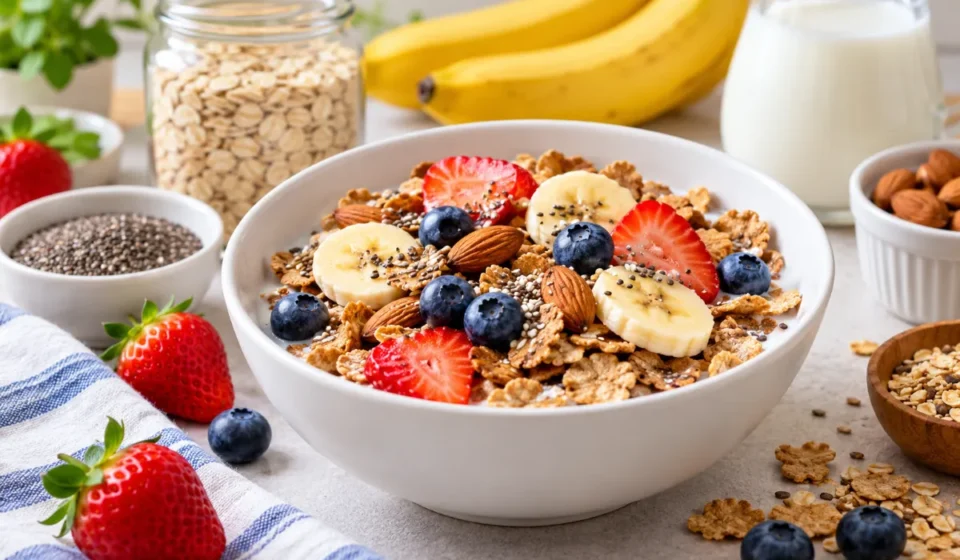

Healthy cereal is usually made with whole grains, provides a good amount of dietary fiber, contains little added sugar, and offers a balanced mix of nutrients. Plain oatmeal, Original Shredded Wheat, and Original Cheerios are nutritious breakfast choices worth considering. Still, no single cereal is the healthiest for everyone. The best option depends on your nutritional needs, dietary preferences, and what you eat with it.
The healthiest breakfast cereals aren’t always the ones with the most impressive claims on their packaging. A product labeled “high protein” or “made with whole grains” may still contain substantial added sugar. Looking beyond these claims and comparing ingredients, fiber, protein, sodium, and serving sizes can help you make a better choice.
What Makes a Cereal Healthy?
A nutritious breakfast cereal should provide valuable nutrients without excessive added sugar, sodium, or saturated fat. Here are the main things to look for:
- Whole grains: Choose cereals that list whole-grain oats, whole wheat, or another whole grain among their first ingredients. Whole grains retain the bran, germ, and endosperm, providing nutrients that can be lost during refining.
- Dietary fiber: Fiber supports digestion and can help you feel satisfied after eating. Cereals containing 3–5 grams of fiber per serving are worth considering, although portion sizes vary.
- Limited added sugar: Plain, unsweetened cereals generally offer more control over sugar intake than heavily sweetened varieties.
- Protein: Protein helps make breakfast more satisfying. Even a cereal with modest protein content can work well when combined with milk, yogurt, or nuts.
- Overall nutritional quality: Look beyond individual nutrients. Sodium, calories, whole-grain content, and nutrients such as iron and B vitamins also deserve attention.
Fortified cereals can provide useful vitamins and minerals. However, adding nutrients to a cereal doesn’t automatically make it a balanced choice, especially if it contains substantial added sugar.
Best Healthy Cereals to Consider
Several familiar cereals available in the United States offer a nutritious starting point. Since products within the same brand can differ significantly, it’s important to compare specific varieties rather than assume they’re all equally healthy.
The table below compares four options using a standardized 40-gram dry portion.
| Healthy cereal | Labeled serving | Calories per 40 g | Fiber per 40 g | Protein per 40 g | Added sugar per 40 g |
| Original Cheerios | 39 g | 144 | 4.1 g | 5.1 g | 1.0 g |
| Post Original Spoon Size Shredded Wheat | 60 g | 140 | 5.3 g | 4.7 g | 0 g |
| Plain Quaker Old Fashioned Oats | 40 g | 150 | 4 g | 5 g | 0 g |
| Ezekiel 4:9 Original Sprouted Whole Grain Cereal | 57 g | 126 | 4.2 g | 5.6 g | 0.7 g |
Values are calculated from available product nutrition information and rounded where necessary. The 40-gram comparison is for evaluating nutritional differences, not a recommended serving size. Product formulations and labels may change.
Original Cheerios
Original Cheerios are made primarily with whole-grain oats. A labeled serving provides 4 grams of fiber, 5 grams of protein, and just 1 gram of added sugar. That makes them a convenient low sugar cereal for people who prefer a ready-to-eat breakfast.
The important distinction is choosing the original variety. Flavored Cheerios products can contain different amounts of sugar, fiber, and other nutrients, so their nutritional values shouldn’t be treated as interchangeable.
Original Shredded Wheat
Post Original Spoon Size Shredded Wheat delivers 8 grams of fiber and 7 grams of protein per 60-gram serving. It’s made with whole-grain wheat and contains no added sugar.
With its relatively high fiber content, it’s a useful high fiber cereal for anyone trying to eat more whole grains. However, because it contains wheat, it isn’t suitable for people following a gluten-free diet.
Plain Oatmeal
Plain Quaker Old Fashioned Oats provide approximately 150 calories, 4 grams of fiber, and 5 grams of protein per 40-gram dry serving, with no added sugar. Oats also contain beta-glucan, a soluble fiber that contributes to their nutritional value.
One advantage of oatmeal is the flexibility it offers. You can add fruit, nuts, or milk to suit your preferences without relying on a pre-sweetened product. Just remember that flavored instant oatmeal packets may have a different nutritional profile from plain rolled oats.
Ezekiel 4:9 Original Sprouted Whole Grain Cereal
Ezekiel 4:9 Original Sprouted Whole Grain Cereal combines sprouted grains and legumes. Its 57-gram serving provides 6 grams of fiber and 8 grams of protein, making it a useful option for shoppers looking for more protein without substantial added sugar.
However, its ingredients include wheat, barley, and soybeans, and the product also declares sesame as an allergen. It’s unsuitable for gluten-free diets and for anyone who needs to avoid these allergens.
How to Read a Cereal Nutrition Label
The Nutrition Facts panel gives you a clearer picture of a cereal’s nutritional value than its front-of-package claims. A few simple checks can help you compare products more confidently.
Check Added Sugar, Fiber, and Protein
Start with the added-sugars information. As the FDA’s explanation of added sugars makes clear, total sugar includes both naturally occurring sugars and sugars added during processing.
As a practical shopping guideline, consider cereals with around 5 grams or less of added sugar per serving. Unsweetened options are often preferable, but compare similar serving weights before making a decision. A smaller serving can make a sugary cereal appear lower in sugar than it really is.
Fiber is another important consideration. A cereal providing at least 3 grams per serving makes a useful contribution to your daily intake, while one containing 5 grams or more provides a larger amount.
Protein also matters, especially when cereal makes up most of your breakfast. However, a higher protein number doesn’t automatically mean better overall nutrition.
When comparing US Nutrition Facts labels, remember that 5% Daily Value or less is generally considered low, while 20% or more is considered high for a particular nutrient.
Look at Ingredients and Serving Sizes
Ingredients appear in descending order by weight. Seeing whole-grain oats or whole wheat near the top of the ingredient list is a useful indication that whole grains make up a meaningful part of the cereal.
The FDA’s guidance on understanding Nutrition Facts labels can also help you evaluate serving sizes and nutrient amounts.
Pay particular attention to:
- Serving size: Compare cereal weights in grams rather than relying only on cup measurements. Different cereals have different densities.
- Sodium: Check the amount per serving, particularly if you regularly eat packaged cereals.
- Calories: Consider how much cereal you actually pour and whether you’re adding milk, yogurt, or toppings.
- Health claims: Terms such as “natural,” “multigrain,” and “made with whole grains” don’t necessarily mean a cereal is low in added sugar or high in fiber.
Choosing Healthy Cereal for Your Dietary Needs
Your ideal cereal may depend on whether you’re trying to reduce added sugar, increase fiber, eat more protein, or accommodate a specific dietary requirement.
Lower Sugar, Higher Fiber, or Higher Protein
If reducing added sugar is your priority, plain oatmeal and Original Shredded Wheat are good starting points. Original Cheerios is another relatively low-sugar option.
For more fiber, compare shredded wheat, bran-based cereals, and other whole-grain products. If your usual diet is low in fiber, increase your intake gradually and drink enough fluids to help minimize digestive discomfort.
Looking for a high protein cereal? You can choose a variety with more protein or simply add Greek yogurt, dairy milk, or fortified soy milk to a whole-grain cereal. This can make breakfast more substantial without requiring a specialized product.
Weight Management and Blood Sugar Awareness
Healthy cereal can fit into a weight-management eating plan, but the portion you eat and your overall dietary habits matter more than claims printed on the box.
If you’re watching your blood sugar, pay attention to total carbohydrates as well as added sugar, fiber, and serving size. Even cereals without added sugar contain carbohydrates that can raise blood glucose.
Higher-fiber varieties paired with protein or healthy fats may help you put together a more balanced breakfast. People with diabetes should consider their individual carbohydrate needs and blood glucose responses rather than assuming any particular cereal is automatically suitable.
Children’s Cereals and Gluten-Free Choices
For children, look for whole grains, age-appropriate portions, limited added sugar, and useful nutrients such as iron. Fortified cereals can contribute important nutrients, but it’s still worth evaluating their overall nutritional quality.
Gluten-free choices require extra attention. Although oats naturally contain no gluten, contact with wheat, barley, or rye during processing can introduce gluten.
The Celiac Disease Foundation’s guidance on gluten-free oats explains why sourcing and labeling matter. People with celiac disease should choose appropriately labeled gluten-free products and follow their healthcare professional’s recommendations.
How to Make a Bowl of Cereal More Nutritious
What you add to cereal can make a noticeable difference to the nutritional value of your breakfast.
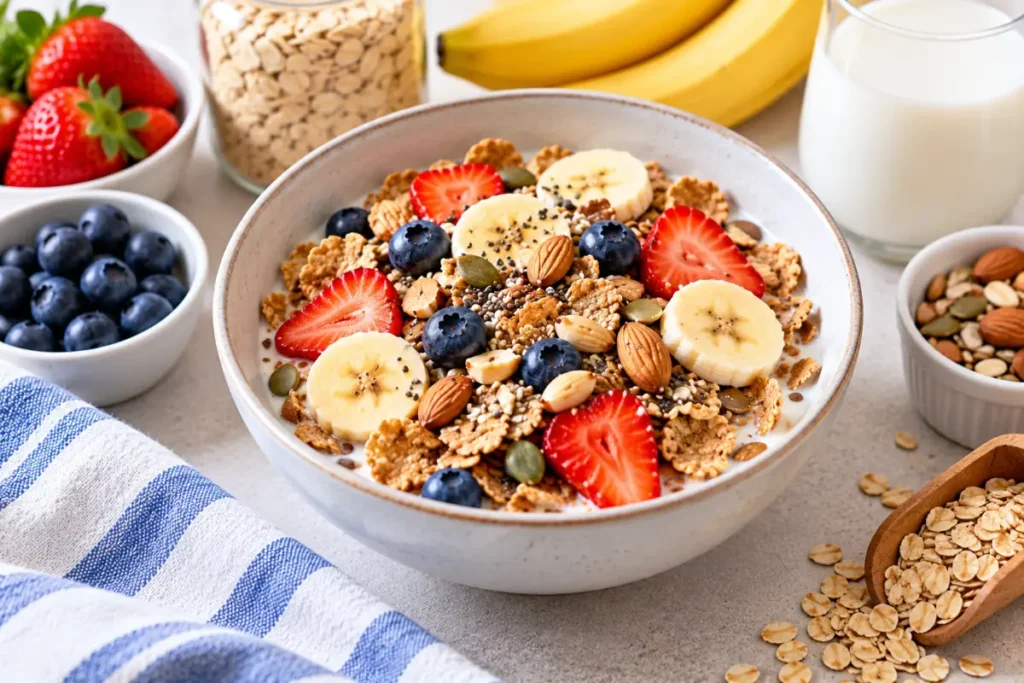
Dairy milk or unsweetened fortified soy milk can increase protein intake, while plain Greek yogurt adds protein and gives cereal a creamier texture. Fresh berries, bananas, and chopped apples provide natural sweetness along with useful nutrients.
Nuts and seeds are another option. They supply unsaturated fats and, depending on the variety, additional protein and fiber. Because they’re calorie-dense, though, it’s worth being mindful of portions.
A measured serving of whole-grain cereal topped with fruit and accompanied by a protein-rich food can offer a more balanced breakfast than an oversized bowl of cereal on its own.
Read also: Surgical Tech Salary: Pay by State, Experience, Certification, and Employer
Frequently Asked Questions
Is granola healthier than oatmeal?
Not always. Plain oatmeal provides whole grains and fiber without added sugar. Granola may contain nutritious ingredients such as nuts, seeds, and whole grains, but some products also have significant amounts of added sugar and calories. The healthier choice depends on the ingredients, nutritional values, and how much you eat.
Can cereal be a healthy breakfast every day?
Yes. Eating cereal daily can be part of a balanced diet, particularly when you choose a whole-grain variety with fiber and limited added sugar. Adding fruit and protein-rich foods can make breakfast more nutritious and satisfying. It’s also important to maintain variety in your overall diet rather than relying on cereal for all your nutritional needs.