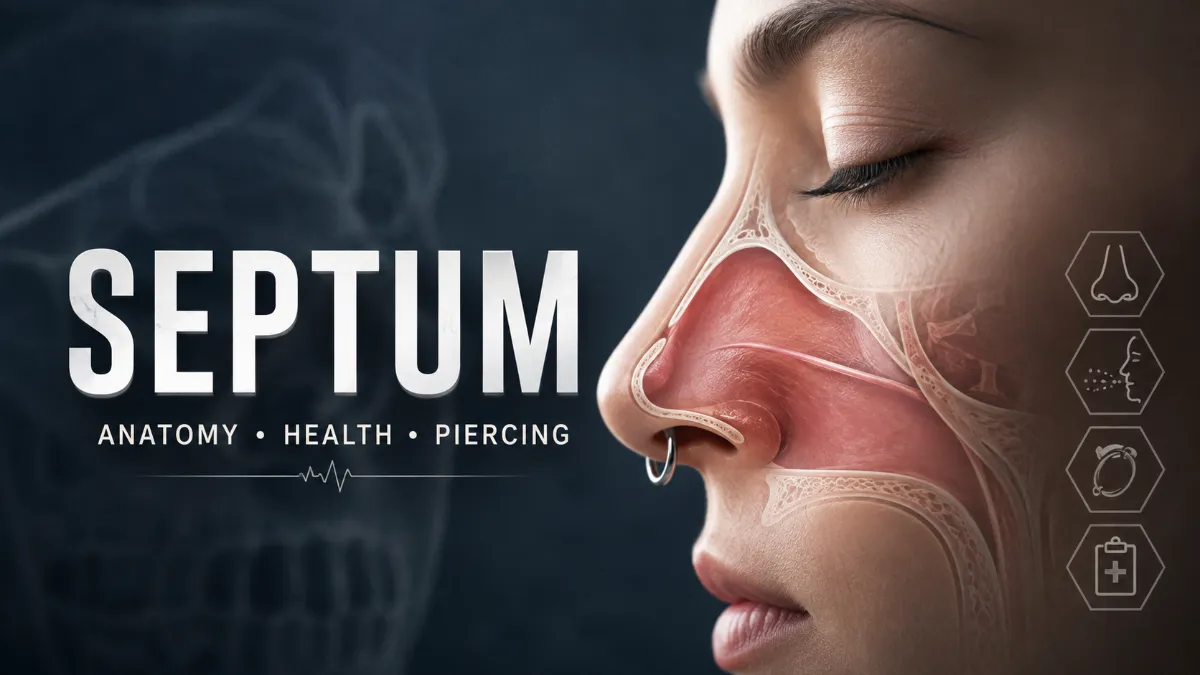
The septum is the wall of bone and cartilage that divides your nose into two nostrils, and it plays a central role in breathing, sinus health, and nose piercings. Understanding how the septum works helps you decide whether your symptoms need an ENT visit, whether surgery makes sense, and how to safely get or care for a septum piercing.
Choose Your Path
- Concerned about breathing or a deviated septum?
Start with the medical sections on anatomy, symptoms, treatment, and surgery. - Considering a septum piercing?
Skip to the piercing sections for placement, risks, and healing timelines.
Quick Facts About the Septum
- The nasal septum is the midline wall that separates the left and right nasal cavities into two airflow channels.
- A normal septum is roughly central; a deviated septum is crooked or off-center and may narrow one passage.
- Common symptoms of deviation include one-sided blockage, sinusitis, nosebleeds, snoring, and headaches.
- Mild deviations often respond to nasal sprays and allergy treatment; structural correction requires septoplasty surgery.
- A septum piercing passes through the soft columella between the nostrils, not through the thick cartilage or bone.
What Is the Septum?
The nasal septum is the vertical partition in the midline of the nose, running from the nostrils in front to the choanae (openings to the nasopharynx) at the back. It forms the medial wall of each nasal cavity and helps stabilize the external shape of the nose.
Read more: Septum
Bony and Cartilaginous Structure
The septum has a bony component and a cartilaginous component that work together.
- Bony part: Primarily the perpendicular plate of the ethmoid bone superiorly and the vomer bone inferiorly, with smaller contributions from the maxilla, palatine, nasal, frontal, and sphenoid bones.
- Cartilaginous part: The septal (quadrangular) cartilage forms the flexible front portion, completing the separation between the nasal cavities anteriorly.
- Columella: The visible soft tissue strip between the nostrils, made of cartilage and soft tissue, is the external end of the septum.
The entire septum is lined with mucosa that warms, humidifies, and filters the air you breathe, supported by surrounding turbinates that increase the surface area of the nasal cavity.
How the Septum Affects Breathing
The septum’s primary function is to divide the nasal cavity into two passages so air can flow efficiently through both nostrils. Together with the turbinates and nasal valve region at the front of the nose, it regulates airflow, conditions inhaled air, and helps support smell and speech.
When the septum is reasonably centered, airflow is usually balanced, even if one side feels slightly stronger at different times of day due to normal mucosal cycling. When it is significantly deviated, airflow can become uneven or restricted, increasing the likelihood of congestion, sinusitis, and snoring.pmc.
Normal vs Deviated Septum
A normal septum is not perfectly straight in everyone, but it allows adequate airflow through both sides without chronic symptoms. A deviated septum involves a bending, bowing, or displacement of the bone and cartilage that narrows one or both nasal passages.pmc.
Deviated Septum: Causes, Symptoms, and Related Conditions
A deviated septum occurs when the bone and cartilage separating the nasal cavities is displaced away from the midline. Many people have mild deviations with few or no symptoms, but more severe cases can significantly alter breathing and sinus function.
Common Causes
- Congenital differences present at birth.
- Nasal trauma, including sports injuries or accidents.
- Growth-related changes, sometimes interacting with turbinate hypertrophy or nasal valve narrowing.
Key Symptoms
- One-sided or alternating nasal obstruction, often worse on the narrower side.
- Recurrent sinusitis due to impaired drainage.
- Frequent nosebleeds from mucosal drying and turbulence.
- Postnasal drip and chronic rhinitis symptoms.
- Snoring or noisy breathing during sleep.
- Facial pressure or headache around the nose and forehead.
Conditions that commonly coexist include turbinate hypertrophy, chronic rhinitis, and sinusitis, all of which can intensify the impact of a deviated septum on airflow and mucus clearance.
Deviated Septum vs Allergies
Allergic rhinitis can mimic or amplify deviated septum symptoms, but the underlying mechanisms differ.
Many people have both — a deviated septum plus allergies which is why a proper ENT evaluation is important when congestion remains chronic despite medication.
Deviated Septum vs Septal Perforation
A deviated septum and a septal perforation are distinct structural problems.
When Should You See an ENT?
You should consider seeing an ear, nose, and throat (ENT) specialist if:
- You have persistent one-sided nasal blockage lasting more than several weeks.
- You experience recurrent sinus infections despite appropriate medical treatment.
- Nosebleeds are frequent and not explained by obvious irritation.
- You snore loudly, have suspected sleep apnea, or struggle to breathe through your nose at rest.
- You notice visible nasal asymmetry or have had significant nasal trauma.
An ENT can perform nasal endoscopy to visualize the septum, turbinates, and nasal valve region, distinguish structural issues from mucosal disease, and recommend appropriate treatment.
ENT Evaluation and Diagnostic Tools
An ENT evaluation typically includes:
- History and symptom review: Duration of obstruction, sinusitis episodes, prior trauma, allergy patterns.
- Physical exam: Inspection with a nasal speculum or endoscope to view septal alignment, turbinate size, and nasal valve area.
- Nasal endoscopy: A thin scope is used to assess the septum, turbinates, sinus drainage pathways, and any septal perforation or hematoma.
- Imaging (sometimes): CT scans may be ordered when sinus disease or anatomical variants are suspected, especially before surgery.
Nasal endoscopy is particularly useful to identify variants like spur formation, turbinate hypertrophy, and nasal valve compromise that influence how a deviated septum affects airflow.
Treatment Options for a Deviated Septum
A deviated septum that does not cause bothersome symptoms often only requires monitoring. When symptoms interfere with daily life, treatment progresses from medical management to surgery.
Non-Surgical Management
Non-surgical options address mucosal inflammation and related conditions:
- Intranasal corticosteroid sprays to reduce swelling from chronic rhinitis or allergies.
- Antihistamines and decongestants for allergy-related congestion.
- Saline irrigation to keep mucosa moist and support mucus clearance.
- Treatment of associated conditions like sinusitis or turbinate hypertrophy.
These measures can meaningfully improve symptom burden even when the septum remains structurally deviated.
Septoplasty Surgery
Septoplasty is the definitive procedure that repositions and reshapes the septum to improve airway patency. The surgery is usually performed through the inside of the nose and may involve removing or reshaping portions of bone or cartilage while preserving overall nasal support. Septoplasty is often considered when:
- Nasal obstruction is persistent and clearly linked to septal deviation.
- Sinusitis recurs despite medical therapy.
- Structural deviation contributes to sleep-disordered breathing.
Some patients combine septoplasty with rhinoplasty when they also wish to alter the external shape of the nose while improving function.
Septoplasty vs Rhinoplasty
Septoplasty and rhinoplasty can address overlapping issues but serve different primary purposes.
Septoplasty Candidacy Checklist
You may be a good candidate for septoplasty if:
- You have documented septal deviation on exam or imaging.
- Medical therapy has not adequately relieved obstruction or sinusitis.
- Symptoms significantly affect sleep, exercise, or daily comfort.
- You understand the benefits, risks, and realistic expectations for airflow improvement.
Patients whose symptoms are mainly allergy-driven or minimal may benefit more from optimizing medical therapy before considering surgery.
Septoplasty Recovery Milestones
Recovery varies by individual, but typical milestones include:
- First week: Nasal congestion and mild discomfort, sometimes with splints in place; bruising is usually limited.
- Weeks 2–4: Swelling decreases, breathing gradually improves as mucosa heals and crusting reduces.
- Months 1–3: Internal healing continues; airflow stabilizes, and most day-to-day restrictions are lifted.
During recovery, patients are usually advised to avoid strenuous exercise, nose blowing, and trauma to the nose, and to attend follow-up visits for splint removal and healing checks.
Risks and Complications
Potential risks of septal surgery include:
- Persistent or recurrent nasal obstruction.
- Bleeding or infection.
- Septal perforation or hematoma formation.
- Changes in nasal shape, especially if the supporting framework is altered.
A septal hematoma is a blood collection between the septal cartilage and its lining, often due to trauma or surgery, that can compromise cartilage nutrition and requires prompt drainage. Discuss all risks with your surgeon before deciding on surgery.
Cost and Insurance Considerations
Costs for septoplasty and related procedures vary widely by region, hospital, and surgeon. When performed for medically documented obstruction or sinusitis, septoplasty is often at least partially covered by insurance, whereas purely cosmetic rhinoplasty is commonly self-funded. Patients should check with their local provider and insurer to understand expected fees, coverage policies, and preauthorization requirements.
Septum Piercings
A septum piercing is placed through the soft tissue just beneath the septal cartilage, in front of the bony portion, rather than through the thick cartilage or bone itself. This area, often referred to by piercers as the “sweet spot,” is chosen to minimize trauma and improve comfort.
Placement and Jewelry
Professional piercers typically:
- Identify the central soft tissue (columella) between the nostrils below the septal cartilage.
- Use sterile clamps and a hollow needle to pierce through in one controlled motion.
- Insert jewelry immediately, often a circular barbell or ring made of hypoallergenic materials such as titanium, surgical-grade stainless steel, or 14-karat gold.
Correct placement reduces the risk of piercing thick cartilage, which can be more painful and slow to heal.
Septum Piercing vs Nostril Piercing
Septum and nostril piercings differ in anatomy, sensation, and aftercare.
Septum Piercing Risks and Complications
As with any piercing, risks include infection, allergic reactions, and scarring. Specific considerations for septum piercings include:
- Swelling and tenderness in the first days to weeks.
- Discomfort if jewelry is too large or heavy.
- Irritation from manipulating or rotating jewelry excessively.
- Rarely, trauma to the septal cartilage or mucosa if placement is incorrect.
Choosing an experienced piercer and appropriate jewelry significantly reduces complication risk.
Septum Piercing Healing Timeline
Healing times vary, but a general timeline is:
- Week 1: Swelling, tenderness, and mild redness; daily saline cleaning is important.
- Weeks 2–4: Discomfort gradually decreases; crusting around the jewelry lessens with proper cleaning.
- Months 1–3: Tissue strengthens and stabilizes, and many people can safely change jewelry under guidance once healing is sufficient.
Full internal healing may take several months, and rushing jewelry changes increases the risk of irritation or infection.
Septum Piercing Aftercare Best Practices
Effective aftercare includes:
- Gently cleaning the piercing with sterile saline solution as recommended by your piercer.
- Avoiding alcohol-based cleansers or harsh scrubbing that can irritate mucosa.
- Minimizing touching or rotating jewelry unless necessary for cleaning.
- Monitoring for signs of infection such as excessive redness, heat, or discharge and seeking care if they appear.
- Keeping cosmetics and strong fragrances away from the piercing area during early healing.
Myths vs Facts
- Myth: A deviated septum always needs surgery.
Fact: Many mild deviations cause minimal symptoms and can be managed with medical therapy and lifestyle adjustments; surgery is reserved for significant structural problems. - Myth: A septum piercing goes through bone.
Fact: The piercing is placed through soft tissue below the septal cartilage and does not traverse bone. - Myth: All nasal blockage is due to a deviated septum.
Fact: Allergies, chronic rhinitis, turbinate hypertrophy, sinusitis, and nasal valve issues can all contribute to obstruction, with or without septal deviation.
Frequently Asked Questions
Yes, children can have a deviated septum from birth or after nasal trauma, and it can contribute to mouth breathing, snoring, and recurrent sinus infections. Many mild deviations are monitored while treating associated conditions like allergies or sinusitis. Surgery is considered more cautiously in growing children and is typically reserved for cases where obstruction seriously affects breathing, sleep, or sinus health; timing depends on severity, age, and overall facial growth considerations.pmc.ncbi.nlm.nih+2
A deviated septum itself may remain relatively stable, but its impact on symptoms can change over time due to factors like nasal trauma, turbinate enlargement, chronic rhinitis, or sinus disease. Age-related changes in mucosal health and muscle tone can also affect airflow, making a previously tolerable deviation more noticeable. Regular ENT evaluations are helpful if nasal obstruction progresses or new symptoms appear, as treatment options may shift with evolving anatomy and health status.pmc.ncbi.nlm.nih+1
Initial swelling and tenderness after a septum piercing often peak in the first few days and gradually improve over one to two weeks, assuming proper placement and aftercare. Mild sensitivity can persist for several weeks as the tissue stabilizes, especially if the jewelry is bumped or manipulated frequently. Consistent saline cleaning, avoiding unnecessary touching, and using suitable jewelry materials help minimize prolonged irritation. If swelling worsens or is accompanied by significant discharge or pain, evaluation by a piercer or healthcare professional is advisable.
Many people can wear glasses after septoplasty, but short-term adjustments are common while swelling and tenderness resolve. Because the nasal bridge and soft tissues may be sensitive in the early weeks after surgery, surgeons often recommend lighter frames or avoiding pressure on the nose immediately postoperatively. As healing progresses and the septum stabilizes, most patients return to their usual eyewear. Discuss timing and any specific concerns with your surgeon before and after the procedure.
Yes, a significantly deviated septum can alter airflow paths to the olfactory area at the top of the nasal cavity, potentially reducing smell perception, especially when combined with mucosal disease or sinusitis. Obstruction can prevent odor-bearing particles from reaching olfactory receptors efficiently. Treating associated conditions and, in some cases, performing septoplasty may improve smell if structural airflow limitations are a major contributor, though results vary and complete recovery is not guaranteed.ncbi.nlm.nih+1
Signs that favor an ENT visit include chronic one-sided obstruction, recurrent sinus infections, visible nasal asymmetry, history of nasal trauma, or persistent symptoms despite well-targeted allergy therapy. If decongestants and antihistamines temporarily help but symptoms quickly return, or if you develop nosebleeds or facial pressure, structural issues like septal deviation or turbinate hypertrophy may be involved. An ENT can perform nasal endoscopy to clarify the cause and recommend tailored treatment.ncbi.nlm.nih+1
A septal hematoma is a blood collection that forms between septal cartilage and its mucosal lining, most often after trauma or surgery. Because the cartilage relies on close contact with the lining for nourishment, an untreated hematoma can compromise cartilage viability and lead to structural problems such as saddle nose deformity. Symptoms include pain, obstruction, and a soft swelling inside the nose. Prompt drainage and treatment are important to prevent complications.
Yes, many cases of chronic rhinitis and sinusitis respond to medical management, including nasal corticosteroids, saline irrigation, allergy control, and, when appropriate, antibiotics or other targeted therapies. However, when structural issues like a marked deviated septum or turbinate hypertrophy contribute significantly to impaired drainage and airflow, surgery may be considered as part of a comprehensive plan. The decision depends on symptom severity, failure of medical therapy, and the findings on exam and imaging.ncbi.nlm.nih+1
A well-placed, properly cared-for septum piercing in healthy tissue does not automatically cause sinus infections, but poor hygiene, trauma, or unsuitable jewelry can increase local infection risk. Because the piercing passes through mucosa, careful aftercare and attention to any signs of infection are important. People with chronic sinusitis or rhinitis should discuss piercing plans with a healthcare professional if they are concerned about interactions with existing conditions.
Many people with mild deviations still have a suitable soft tissue area at the front of the septum for piercing, and a deviated septum does not automatically rule out a septum piercing. However, significant anatomical variants, prior surgery, or septal perforation may affect placement and risk. An experienced piercer should assess your anatomy, and if there is any doubt, consulting an ENT beforehand can clarify whether your specific septal structure makes piercing riskier.
