What Does a Broken Jaw Look Like? Signs, Symptoms, and Emergency Care
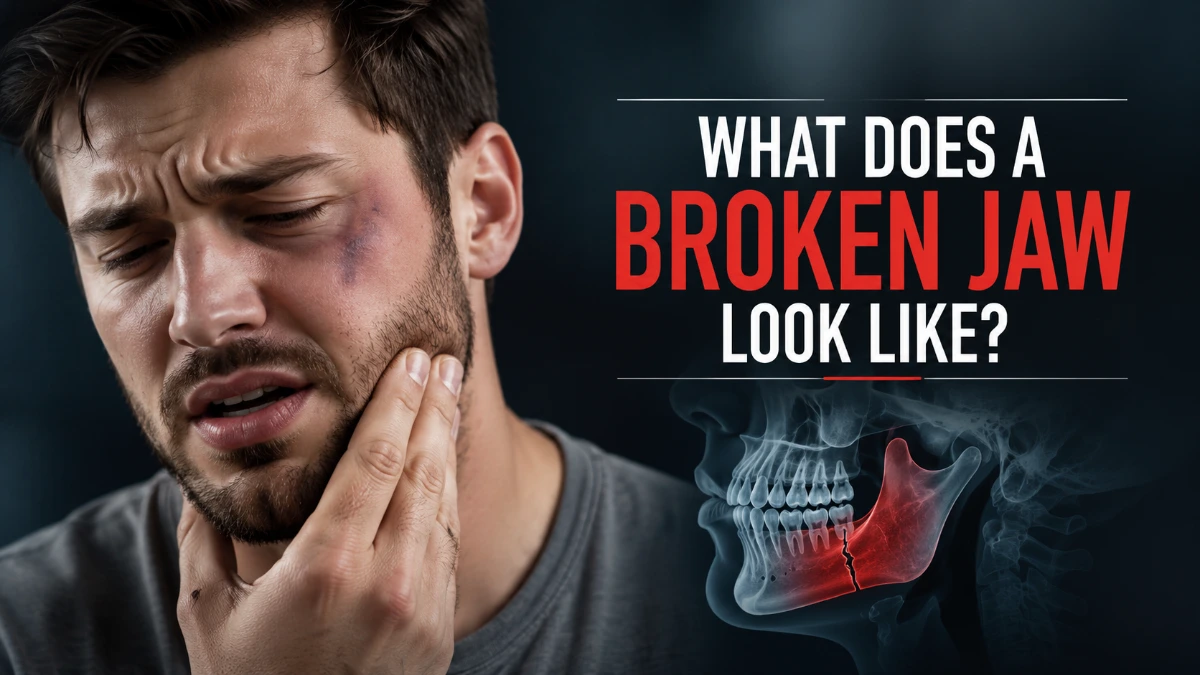
A broken jaw may look swollen, bruised, uneven, or shifted after an injury. The most important clue is often not the outward appearance but a bite that suddenly feels wrong: your teeth may no longer meet as they did before. Pain when chewing or speaking, trouble opening or closing the mouth, bleeding inside the mouth, loose teeth, and numbness of the lower lip or chin are also important signs of a possible jaw fracture.
A broken jaw—usually a fracture of the lower jawbone, or mandible—requires urgent medical assessment. Some fractures are not visibly obvious, while swelling can hide a change in facial shape. A clinician needs to examine the injury and may use imaging to confirm the diagnosis, check for related facial injuries, and decide whether the jaw needs stabilization or surgery.
What does a broken jaw look like?
A fractured jaw can look very different from person to person. The visible appearance depends on where the bone is injured, whether the fracture has shifted out of position, how much swelling has developed, and whether teeth or soft tissues were also damaged.
Possible visible signs of a broken jaw include:
- Swelling along the lower jaw, chin, cheek, or in front of the ear
- Bruising on the jaw, cheek, chin, or inside the mouth
- An uneven, crooked, flattened, or shifted jawline
- Facial asymmetry, especially when comparing one side of the jaw with the other
- A bump, indentation, or irregular contour along the lower edge of the jaw
- Bleeding from the mouth or around the gums
- A cut, torn gum, or bruised area inside the mouth
- Loose, broken, missing, or displaced teeth
- Drooling because closing the mouth is difficult
- A lower jaw that appears pushed forward, to one side, or partly open
Not every mandibular fracture produces a visible deformity. A person may have only mild swelling and still have a significant injury. Conversely, a swollen jaw after injury can result from bruising, a dental injury, a jaw-joint injury, or a soft-tissue injury rather than a fracture. A changed bite, numbness, dental damage, or difficulty moving the jaw makes a fracture more concerning.
Read more: What Does a Broken Jaw Look Like
The clearest warning sign: your bite feels different
A bite that suddenly feels wrong after facial trauma is one of the strongest signs of a broken jaw. When you gently bring your teeth together, they may no longer meet in their normal positions. Back teeth may touch before front teeth, an unusual gap may form, or the upper and lower teeth may seem shifted.
This is called malocclusion. It may develop when a fracture changes the position of one part of the jaw, even if the face does not look noticeably crooked. A step or break in the usual line of the teeth can also be present.
Do not keep clenching, chewing, or forcing your teeth together to test the bite. Unnecessary movement can increase pain and may worsen an unstable injury.
Broken jaw symptoms that may not be visible
A fracture can affect jaw movement, teeth, nerves, and the soft tissues of the mouth. These symptoms may be more useful than appearance alone.
Pain with chewing, talking, or jaw movement
Pain is common at the site of impact, but it may also be felt at the chin, along the lower jaw, or in front of the ear. Chewing, speaking, yawning, opening the mouth, and closing the teeth together can make the pain worse.
Difficulty opening or closing the mouth
A person with a jaw fracture may be unable to open the mouth normally because of swelling, pain, muscle spasm, or changes in how the jaw moves. This restricted opening is often called trismus. Some people cannot close their mouth completely, while others notice the jaw shifting toward one side when they try to open it.
Numbness in the lower lip or chin
Numbness, tingling, or reduced sensation in the lower lip, chin, or lower gums can occur when the injury affects nerves that travel through the mandible. This is a significant symptom to report because it can occur with a mandibular fracture or nerve injury.
Tooth and gum injuries
Jaw fractures may happen alongside damaged teeth and gums. You may notice loose teeth, cracked teeth, a tooth that has moved, bleeding from the gums, or pain around teeth that were not painful before the injury. A torn gum near a fracture can allow bacteria from the mouth to reach the injured bone, which is one reason prompt assessment matters.
Pain near the ear or trouble swallowing
The temporomandibular joints, which connect the lower jaw to the skull, sit directly in front of the ears. An injury near these joints can cause pain in front of the ear, swelling, and limited mouth opening. Difficulty swallowing, trouble handling saliva, or severe drooling after facial trauma should be assessed urgently.
What can a fractured jaw look like inside the mouth?
Inside the mouth, signs of a jaw fracture may include bleeding gums, torn gums, bruising, a change in tooth alignment, or teeth that no longer meet evenly. A clinician may look for a step-off, an uneven area along the teeth, tooth-bearing ridge, or jawbone that may suggest the bone has shifted.
Other possible findings include:
- A bruised or swollen gum area
- Blood or swelling under the tongue
- A loose, cracked, missing, or displaced tooth
- A gap between teeth that was not present before the injury
- Pain when biting or when the jaw is gently examined
- A visible change in how the teeth line up
Do not put your fingers deep into someone else’s mouth to check for a fracture. Blood, swelling, loose teeth, nausea, reduced alertness, or breathing difficulty can create a choking risk. Seek urgent professional care instead.
Broken jaw vs. dislocated jaw
A broken jaw and a dislocated jaw can both cause severe pain, swelling, an abnormal bite, and difficulty speaking. However, they are different injuries and require professional assessment.
A broken jaw means the jawbone has cracked or fractured. A dislocated jaw means the lower jaw has moved out of its normal position at one or both temporomandibular joints.
| Feature | Broken jaw or mandibular fracture | Dislocated jaw |
| Main injury | A break in the lower jawbone | The lower jaw moves out of its normal joint position |
| Appearance | Swelling, bruising, uneven jawline, possible deformity | Mouth may remain open; jaw may look pushed forward or lopsided |
| Bite | Often feels suddenly misaligned | Teeth may not meet normally |
| Mouth movement | Painful, limited, or shifted to one side | Often difficult or impossible to close the mouth |
| Dental injury | Loose, broken, missing, or displaced teeth may occur | Dental injury is less typical but can occur with trauma |
| Diagnosis | Examination plus imaging such as X-ray or CT | Examination; imaging may be needed when a fracture is possible |
| Treatment | May involve a soft diet, stabilization, fixation, or surgery | Usually requires prompt professional repositioning |
A dislocated jaw commonly leaves the mouth stuck open and can cause drooling and difficulty speaking. A fracture can also interfere with mouth closure, so it is not safe to diagnose the injury yourself. Do not try to push, pull, or “pop” the jaw back into position.
What causes a broken jaw?
Most jaw fractures happen after a forceful impact to the face or chin. Common causes include:
- Falls, especially onto the chin
- Road traffic collisions
- Bicycle, pedestrian, or workplace accidents
- Sports-related impacts
- Physical assault
- A direct blow from an object
- Severe facial or dental trauma
The mandible is a curved, ring-like bone. A strong impact in one area can sometimes cause more than one fracture, which is why a full facial assessment is important after substantial trauma.
When to seek emergency care
A suspected broken jaw should be evaluated urgently. Go to an emergency department as soon as possible after significant jaw trauma, particularly if there is pain with a changed bite, swelling, numbness, mouth bleeding, dental injury, or difficulty moving the jaw.
Call emergency services immediately if there is any concern about breathing, severe bleeding, loss of consciousness, or a serious head or neck injury.
Emergency warning signs
Seek emergency help now if you have:
- Trouble breathing, choking, noisy breathing, or a feeling that the airway is narrowing
- Heavy or uncontrolled bleeding from the mouth or face
- Rapidly increasing swelling in the mouth, under the tongue, or beneath the jaw
- Inability to swallow saliva, severe drooling, or repeated choking
- Loss of consciousness, confusion, seizure, unusual drowsiness, or repeated vomiting
- Severe facial deformity after trauma
- A possible head, neck, or spinal injury
- A loose tooth, blood clot, or debris obstructing the mouth in a person who is drowsy or not fully alert
The first priority after serious facial trauma is keeping the airway clear. Blood, swelling, loose teeth, and associated head or facial injuries can make breathing unsafe, even before the jaw fracture itself is treated.
What to do while waiting for medical care
If you suspect a broken jaw, protect the airway and avoid unnecessary jaw movement.
- Keep the injured person upright if they are awake and can sit comfortably. This can help blood and saliva drain from the mouth.
- Support the jaw gently with a hand or soft cloth if this is comfortable. Do not press firmly or try to straighten it.
- Use a cold pack wrapped in cloth on the outside of the face to help limit swelling. Do not apply ice directly to the skin.
- Avoid food, drink, chewing gum, alcohol, and smoking until a clinician advises otherwise. A procedure, surgery, or anesthesia may be needed.
- Do not force the mouth open or closed.
- Do not attempt to realign the jaw, push it back into place, or wire it shut.
- If there is external bleeding, apply gentle pressure with clean gauze or cloth when safe. Do not pack the mouth deeply.
- If the person becomes unconscious, develops breathing difficulty, or cannot handle saliva, call emergency services immediately.
Do not tightly wrap the jaw shut with a bandage. A person must be able to open the mouth if vomiting occurs. Gentle support during transport is safer than attempting firm immobilization without medical guidance.
Jaw fracture diagnosis
A healthcare professional will ask how the injury happened and examine facial shape, jaw movement, bite alignment, teeth, gums, sensation in the lip and chin, and signs of injury elsewhere in the face. They will also check for bleeding, loose teeth, wounds, and possible head or neck trauma.
Imaging is usually needed to confirm or rule out a mandibular fracture. Depending on the injury, this may include:
- Standard facial or jaw X-rays
- A panoramic dental X-ray, often called a panorex
- A CT scan, especially for complex injuries, suspected multiple fractures, or associated facial trauma
Imaging can show the fracture location, whether the bone pieces have moved, whether there may be more than one fracture, and whether the injury extends near teeth or the jaw joint. A jaw that looks normal does not rule out a fracture.
Treatment for a broken jaw
Treatment depends on the fracture location, whether the bone is displaced, bite alignment, dental injuries, soft-tissue wounds, other facial injuries, and overall health. Treatment is often coordinated by an oral and maxillofacial surgeon or facial-trauma team.
The aim is to restore a stable bite, normal jaw function, and bone healing while reducing the risk of infection, poor alignment, ongoing pain, and long-term problems with chewing or mouth opening.
Non-surgical treatment
Some stable, minimally displaced fractures may be treated without an operation. This may involve:
- Pain relief recommended or prescribed by a clinician
- A liquid, blended, or soft-food diet for the period advised by the care team
- Limiting jaw movement
- Follow-up visits to check healing and bite alignment
- Dental treatment if teeth were injured
The diet and activity restrictions vary by injury. Do not return to normal chewing until the treating clinician confirms it is safe.
Fixation and surgery
More serious fractures may need the jaw to be realigned and stabilized. Treatment options can include:
- Closed reduction, in which the jaw is repositioned without directly exposing the fracture
- Maxillomandibular fixation, sometimes called jaw wiring, which temporarily secures the upper and lower teeth or jaws together
- Open reduction and internal fixation, in which a surgeon uses small plates and screws to hold fractured bone segments in the correct position
Surgery is more likely when the fracture is displaced, unstable, involves several fracture sites, significantly changes the bite, or cannot be managed reliably with non-surgical treatment alone.
Recovery after a broken jaw
Recovery depends on the injury pattern and treatment. A stable fracture managed with dietary changes may have a different recovery course from a displaced fracture repaired with plates and screws. Your treating team will advise when you can return to normal foods, exercise, sports, work, driving, and usual jaw movement.
During healing, you may be instructed to:
- Follow a liquid, blended, or soft-food plan
- Take prescribed medication as directed
- Follow oral-cleaning instructions from the dental or surgical team
- Attend follow-up appointments to check the bite, wounds, and healing position
- Avoid contact sports, falls, and activities that could cause another facial impact
- Avoid smoking and other nicotine products if advised, as they can interfere with healing
Contact the treating clinician promptly if you develop fever, worsening pain, increasing swelling, redness around a wound, foul-tasting drainage, a bite that changes again, persistent vomiting, trouble drinking enough fluid, or new difficulty breathing or swallowing.
Why prompt treatment matters
A jaw fracture can affect breathing, eating, speech, dental alignment, sensation, and facial symmetry. Without appropriate care, a fracture may heal in a poor position or lead to persistent bite problems, infection, restricted mouth opening, chronic pain, dental complications, or continuing numbness.
Not every injury will require surgery, but every suspected fracture deserves timely assessment. If a blow to the face has left you with jaw pain plus a changed bite, limited mouth opening, facial swelling, mouth bleeding, numbness, or damaged teeth, it is safer to seek urgent care than to wait for symptoms to settle.
Frequently asked questions
Can you have a broken jaw without bruising?
Yes. A broken jaw can occur without obvious bruising, especially soon after an injury or when the fracture is minimally displaced. Symptoms such as a changed bite, pain with chewing, difficulty opening the mouth, numbness in the lower lip or chin, bleeding from the gums, or loose teeth can be more important than skin discoloration. Because appearance alone cannot rule out a mandibular fracture, seek urgent assessment after facial trauma if you have functional changes or significant pain.
Does a broken jaw always look crooked?
No. Some jaw fractures cause obvious facial asymmetry or a shifted jawline, but others are hidden by swelling or are not substantially displaced. A jaw may look fairly normal while the teeth no longer meet properly or mouth opening becomes painful and limited. A clinician may identify additional clues, such as focal tenderness, a step-off in the dental arch, altered sensation, or tooth injury. Imaging is often needed to confirm the diagnosis.
How can I tell if my jaw is broken or just bruised?
A bruise can cause pain and swelling, but a broken jaw is more concerning when the bite has changed, the jaw shifts while opening, you cannot open or close the mouth normally, teeth are loose or damaged, gums are bleeding, or the lip and chin feel numb. You cannot reliably distinguish a fracture from a severe soft-tissue injury at home. Following a significant blow to the jaw or chin, seek urgent medical evaluation rather than testing the jaw with food or forceful movement.
Can I eat with a suspected broken jaw?
Avoid chewing if you think your jaw may be fractured. Chewing can worsen pain and may move injured bone segments. It is also best not to eat or drink before assessment unless a clinician tells you otherwise, because imaging, a procedure, sedation, or surgery may be needed. Once you have been evaluated, your care team may recommend a liquid, blended, or soft-food diet based on the fracture and the treatment plan.
Can a broken jaw heal without surgery?
Some stable and minimally displaced mandibular fractures can heal without surgery when the bite is aligned and close follow-up is possible. Non-surgical care may include pain management, a modified diet, limited jaw movement, and repeat examinations. Fractures that are displaced, unstable, multiple, open into the mouth, or associated with a changed bite may need fixation or surgical repair. The correct treatment can only be determined after examination and imaging.
Is numbness after a jaw injury serious?
Numbness or tingling in the lower lip, chin, or lower gums after jaw trauma should be assessed promptly. Nerves that supply these areas run through the lower jawbone, and altered sensation can occur with a mandibular fracture or direct nerve injury. The symptom may improve over time, but it should not be ignored, especially if it occurs with swelling, pain, a changed bite, limited mouth opening, or damaged teeth.
Why does my jaw hurt near my ear after being hit?
Pain in front of the ear can occur because the temporomandibular joint is located there. A facial impact can injure the joint, surrounding muscles, or the part of the lower jaw near the joint. Fractures in this area may cause swelling, pain, and limited mouth opening. Because jaw-joint injuries, dislocations, and fractures can have overlapping symptoms, urgent assessment is appropriate when ear-area pain follows trauma and is accompanied by an abnormal bite or difficulty moving the jaw.
What happens if a broken jaw is left untreated?
Without appropriate treatment, a jaw fracture may heal in the wrong position. This can cause a lasting abnormal bite, difficulty chewing, pain, limited mouth opening, facial asymmetry, dental problems, infection, or persistent numbness. The likelihood of complications depends on the type and location of the fracture, but it is not possible to judge severity from appearance alone. Prompt assessment allows clinicians to check alignment, protect the airway, treat dental injuries, and plan appropriate stabilization when needed.
How long does a broken jaw take to heal?
Healing time varies with the fracture location, degree of displacement, treatment approach, dental injuries, nutrition, infection risk, and whether another injury is present. A clinician may recommend a liquid or soft-food diet for several weeks, and activity restrictions can extend beyond the period of strict diet modification. The treating oral and maxillofacial team can give the most useful timeline after reviewing imaging and checking that your bite and bone healing remain stable.
Should I go to the emergency room for a swollen jaw after an injury?
A swollen jaw after an injury needs urgent assessment when it is accompanied by pain with chewing or talking, a changed bite, numbness, mouth bleeding, loose or broken teeth, limited mouth movement, or visible deformity. Go to the emergency department immediately for trouble breathing or swallowing, heavy bleeding, rapidly worsening swelling, severe facial injury, loss of consciousness, confusion, repeated vomiting, or unusual drowsiness. Swelling by itself may be from bruising, but it cannot safely rule out a fracture.

You May Also Like

RAYUS Radiology: Complete Patient Guide to Locations, Services, Scheduling, and Results

Medical Assistant Jobs: Complete Career Guide for 2026