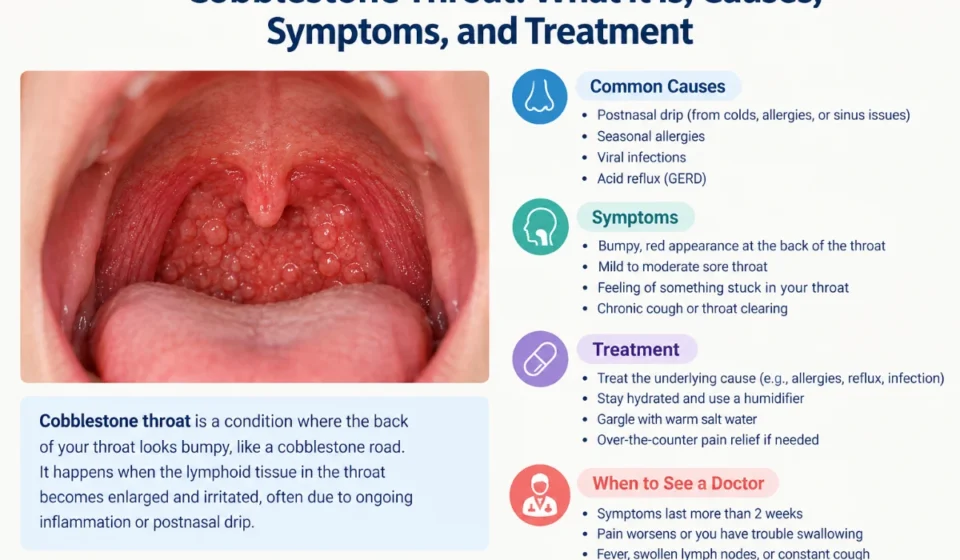

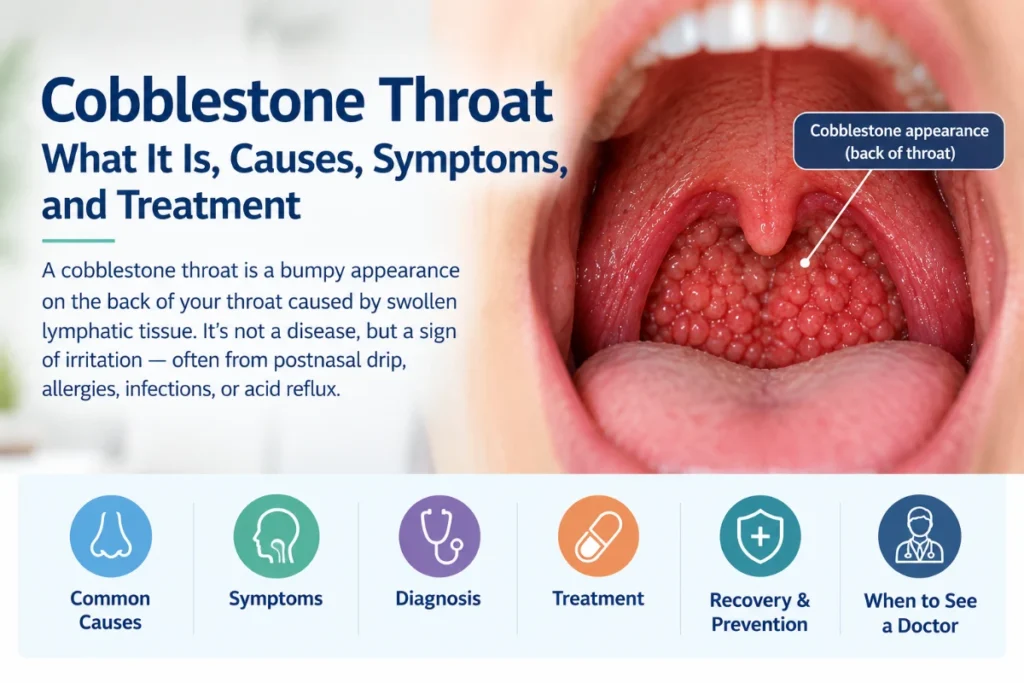
A cobblestone throat is a bumpy appearance on the back of the throat caused by swollen lymphatic tissue responding to ongoing irritation. It is not a disease itself but a symptom, most commonly triggered by postnasal drip from allergies, viral infections, sinus problems, or acid reflux. Although the bumps can look concerning, they are usually harmless, are not contagious on their own, and typically improve once the underlying cause is treated.
Many people with a cobblestone throat notice a sore or scratchy throat, frequent throat clearing, or the feeling that mucus is stuck in the back of the throat. The condition itself cannot spread from person to person, but the illness causing it—such as a viral cold—may be contagious. Identifying what is irritating the throat is the most important step because treatment focuses on that underlying cause rather than the bumps themselves.
What Is Cobblestone Throat?
The back of your throat contains small collections of lymphatic tissue that help your immune system trap germs, allergens, and other irritants. When these tissues are repeatedly exposed to mucus, inflammation, or acid, they swell and form the raised bumps that give cobblestone throat its characteristic appearance.
Unlike strep throat or tonsillitis, cobblestone throat is not a diagnosis by itself. Instead, it is a visible sign that the throat has been irritated. Once the source of irritation is controlled, the swelling gradually decreases and the bumps usually become much less noticeable.
Cobblestone Throat Causes
Several common conditions can irritate the throat and produce the swollen lymphatic tissue responsible for the cobblestone appearance.
Postnasal Drip
The leading cause of cobblestone throat causes is postnasal drip. Extra mucus produced in the nose and sinuses drains down the back of the throat, where it repeatedly irritates sensitive tissue. This commonly happens during seasonal allergies, viral respiratory infections, or sinus inflammation.
Seasonal Allergies
Allergic reactions to pollen, mold, dust mites, or pet dander increase mucus production and nasal congestion. Continuous drainage keeps the throat irritated, allowing the bumps to develop or persist.
Viral Infections
Colds, influenza, and other viral upper respiratory infections frequently cause throat inflammation. As the infection resolves, the swelling typically improves within one to two weeks.
Sinus Problems
Acute or chronic sinusitis may cause ongoing mucus drainage. Persistent postnasal drip throat irritation can prevent the inflamed tissue from healing until the sinus condition is properly managed.
Gastroesophageal Reflux Disease (GERD)
Some people experience acid reflux without noticeable heartburn. When stomach acid repeatedly reaches the throat, it can irritate the lining and contribute to the inflammation seen with cobblestone throat.
Other Irritants
Dry indoor air, cigarette smoke, vaping, air pollution, strong chemical fumes, and frequent throat clearing may all worsen throat irritation and delay healing.
Cobblestone Throat Symptoms
Common cobblestone throat symptoms include:
- Small, raised bumps on the back of the throat
- Sore or scratchy throat
- Frequent throat clearing
- Feeling that mucus is stuck in the throat
- Mild discomfort when swallowing
- Hoarseness or voice changes
- Persistent cough
- Runny or stuffy nose when allergies or viral infections are present
Frequent throat clearing often occurs because postnasal drip continuously stimulates the throat, creating the sensation that mucus needs to be removed even when little is present.
If symptoms include a high fever, severe throat pain, difficulty swallowing, trouble breathing, or significant swelling in the neck, another condition may be responsible and prompt medical evaluation is important.
Cobblestone Throat vs. Similar Conditions
| Condition | Typical Appearance | Common Symptoms | Typical Treatment |
| Cobblestone throat | Raised bumps on the back of the throat | Scratchy throat, mucus drainage, throat clearing | Treat the underlying cause |
| Strep throat | Red throat, swollen tonsils, white patches | Fever, severe sore throat, painful swallowing | Antibiotics if bacterial infection is confirmed |
| Tonsillitis | Enlarged, inflamed tonsils | Fever, swollen tonsils, painful swallowing | Depends on whether the cause is viral or bacterial |
| Oral thrush | White creamy patches that can be wiped away | Mouth soreness, burning sensation | Antifungal medication |
Because these conditions can look similar, a healthcare provider may recommend testing if bacterial strep throat or another illness is suspected.
How Is Cobblestone Throat Diagnosed?
Diagnosis usually begins with a discussion of your symptoms and a physical examination of the throat, nose, and sinuses. Your healthcare provider will ask about allergy symptoms, acid reflux, recent illnesses, medication use, and how long your symptoms have lasted.
If strep throat is suspected, a rapid strep test or throat culture may be appropriate. People with reccurring symptoms may also be evaluated for allergies, chronic sinus disease, or GERD to identify the source of ongoing irritation.
Cobblestone Throat Treatment
Because the bumps are a symptom rather than a disease, cobblestone throat treatment focuses on reducing irritation and treating the underlying condition.
Home Remedies
Many mild cases improve with supportive care, including:
- Drinking plenty of water
- Warm salt water gargles
- Using a cool-mist humidifier
- Drinking warm tea or broth
- Resting your voice when hoarse
- Avoiding cigarette smoke and vaping
- Getting enough rest during viral illnesses
These measures help soothe irritated tissue while the underlying cause improves.
Medical Treatments
Depending on the cause, treatment may include:
- Antihistamines for seasonal allergies
- Nasal corticosteroid sprays for allergic inflammation
- Saline nasal irrigation to reduce mucus buildup
- Acid-reducing medications and lifestyle changes for GERD
- Antibiotics only when a bacterial infection has been confirmed or is strongly suspected
Treating the underlying condition is the most effective way to reduce swelling and allow the throat to heal.
Recovery Time and Prevention
Most cases of cobblestone throat caused by a viral infection improve within one to two weeks. Symptoms related to allergies or acid reflux may continue until those conditions are effectively controlled.
You can reduce the likelihood of recurring symptoms by:
- Managing seasonal allergies
- Treating sinus infections promptly
- Staying well hydrated
- Avoiding smoking and secondhand smoke
- Using a humidifier during dry weather
- Managing acid reflux through appropriate treatment and lifestyle habits
- Washing your hands regularly to reduce viral infections
When to See a Doctor
Although a cobblestone throat is usually not serious, you should seek medical care if you have:
- Symptoms lasting longer than two weeks
- High fever
- Severe or worsening throat pain
- Difficulty swallowing
- Difficulty breathing
- Persistent hoarseness
- Neck swelling
- Recurrent episodes that continue despite treatment
A healthcare provider can determine whether another condition is causing your symptoms and recommend the most appropriate treatment.
Frequently Asked Questions
Is cobblestone throat contagious?
No. A cobblestone throat itself is not contagious. However, if it develops because of a viral infection, the virus that caused it may spread to others.
Can allergies cause cobblestone throat?
Yes. Seasonal allergies are among the most common causes because they increase mucus production and postnasal drip, which repeatedly irritate the back of the throat.
Does acid reflux cause cobblestone throat?
Yes. GERD can expose the throat to stomach acid, leading to irritation and swelling of the lymphatic tissue that creates the cobblestone appearance.
How long does cobblestone throat last?
When caused by a viral infection, symptoms often improve within one to two weeks. If allergies or reflux are responsible, recovery depends on how well those conditions are controlled.
Can cobblestone throat go away on its own?
Yes. Many cases improve without specific treatment once the irritation from a viral illness or temporary allergy exposure resolves. Persistent symptoms should be evaluated by a healthcare provider.
Is cobblestone throat the same as strep throat?
No. Cobblestone throat is a physical finding caused by inflammation, while strep throat is a bacterial infection that may require antibiotics after confirmation.
What home remedies help cobblestone throat?
Hydration, warm salt water gargles, humidified air, warm fluids, avoiding smoke, and getting enough rest can help reduce irritation while the underlying cause improves.
When should I worry about a sore throat with bumps?
Seek medical attention if you have difficulty breathing, severe pain, trouble swallowing, a high fever, symptoms lasting longer than two weeks, or repeated episodes.