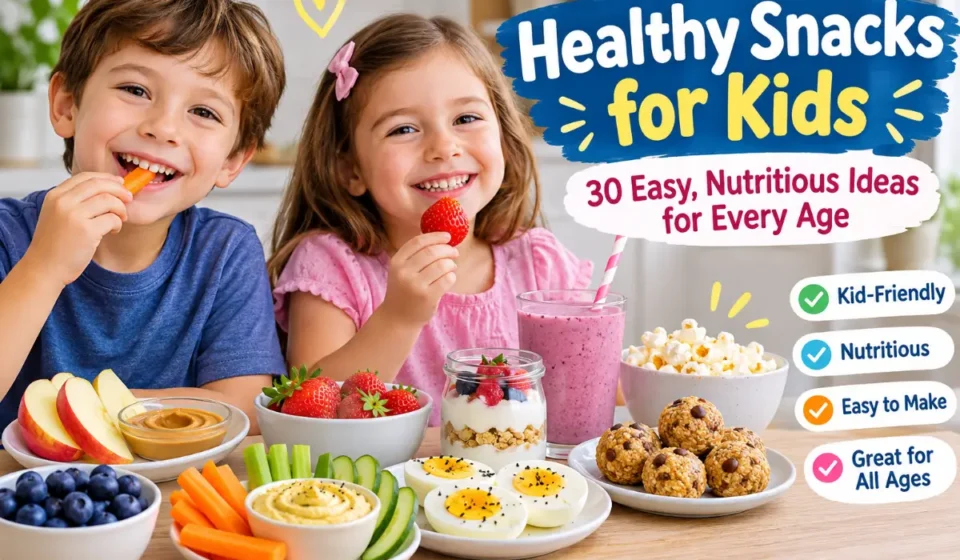

Healthy snacks for children do not need to be complex. A few simple examples of healthy snacks include plain Greek yogurt topped with fresh berries; sliced apples paired with low fat cheese; and whole-wheat toast topped with mashed avocado. These are all examples of healthy snack ideas that can be prepared in a short period of time. It is important to choose a variety of different types of produce (fruits & vegetables), whole grains, sources of protein, and healthy fats when selecting appropriate healthy snacks for your child based upon their age, how much they eat each day, and what they prefer to eat.
These 30 snack ideas provide many choices that can be used in most situations when it comes to packing school lunches, feeding toddlers, or providing food for children who are picky eaters. There are quick combinations, easy-to-prepare home-made recipes, convenient portable selections, and affordable alternatives prepared from common household items.
30 Healthy Snacks for Kids That Are Easy to Make
10 Easy Healthy Snacks for Kids in 5 Minutes
These easy-to-make snacks are great when you want your child to have something to eat between meals, but don’t want to spend too much time preparing it.
Greek yogurt with fruit: Fill a small bowl with plain Greek yogurt. Then, place either washed strawberries or washed blueberries on top of the yogurt. For younger children, you can cut each blueberry in half, and then slice each strawberry into smaller pieces.
Whole wheat toast with banana: spread a small amount of peanut butter or sunflower seed butter onto your toast, then place banana slices on top.
Apple slices and cheese: Use thin apple slices to pair with cheddar or mozzarella. If using firm apples, cook or soften them before serving to your toddler.
Whole grain crackers with hummus. Crackers served with hummus provide a source of fiber as well as a plant-based source of protein. If you are serving crackers to young children, consider providing a softer, age-appropriate alternative to the harder, crunchier types of crackers available.
Stir in some of your favorite fresh, finely-chopped peaches with plain cottage cheese.
Avocado toast: After mashing a ripe avocado over a slice of whole grain toast, then cutting the toast into manageable bite-sized pieces for your child.
Cucumber and Yogurt Dip: Combine plain yogurt with mild herbs, then provide the mixture next to thinly sliced cucumbers. To accommodate toddlers, you can either peel, finely grate or soften the cucumber depending on what is necessary.
Unsweetened applesauce added to a small bowl of cooked oatmeal: Add unsweetened applesauce to a small bowl of already prepared oatmeal.
Pear with ricotta: To combine ripe, finely chopped pear with a spoonful of ricotta cheese.
Spread the cooked, mashed beans on a soft whole wheat tortilla. Then, simply fold the tortilla into a portable, easy-to-carry snack.
7 Homemade Healthy Snacks for Kids
At home, you have more say in what goes into your snacks and how much added sugar is included. The following recipes include ingredients you may already have on hand and most can be made in advance.
Banana-Oat Pancakes: Mash a single banana and combine it with an egg and ¼ cup of finely ground oats. Make small pancakes over medium-low heat until they are completely cooked through on each side.
To prepare apple-cinnamon oatmeal cups: In a bowl combine 1 cup rolled oats; 1/2 cup milk; 1 grated apple; 1 egg; and a dash of cinnamon. Place mixture into well-greased muffin tins and bake in a preheated oven at 350 degrees Fahrenheit (or 175 degrees Celsius) for about 20 to 25 minutes, until the mixture is firm.
Whisk together two eggs with a fourth of a cup of finely diced, cooked vegetables. Fill a greased mini-muffin pan with the mixture and bake at 350 degrees Fahrenheit (or until the internal temperature of the muffins reaches 160 degrees Fahrenheit).
Fruit-Yogurt Pops: Use a blender to combine plain yogurt and either mashed strawberries or mango, and then place into pop molds. This should be reserved for children who are able to handle frozen treats without being injured.
Sweet potato wedges: Cut sweet potatoes into wedge shapes. Lightly spray each wedge with olive oil and then place them on a baking sheet. Bake the sweet potato wedges in the oven at 400°F (204°C) for about 25 to 35 minutes, depending on how thick they are. The sweet potato wedges should be tender when you take them out of the oven.
Combine a mashed banana with an egg, 1/2 cup of oat flour, 2 tablespoons of milk, and 1/4 teaspoon of baking powder. Place the mixture into the greased mini muffin cups and bake the muffins at 350 degrees Fahrenheit (or until they are thoroughly baked) for 12 to 18 minutes.
Mini cheese quesadillas: Use small whole-wheat tortillas to sandwich cheese and heat in a skillet over low-medium heat until the cheese has melted. Allow the quesadilla to cool down somewhat prior to cutting into manageable size portions.
7 Healthy School Snacks for Kids
Snacks that students bring to school should be simple to prepare and easy to consume while avoiding spills. Be sure to review each class’s policy on allergies and maintain proper cooling for all perishable items.
Whole wheat crackers and cheese – pack whole wheat crackers with slices or smaller pieces of cheese. Add a cold pack to the package.
Mandarin oranges and whole grain cereals: Mix peeled mandarin orange segments into a whole grain cereal that has minimal added sugar. Choose a cereal texture that is appropriate for your child to eat safely.
whole-wheat pita and bean dip – pack soft whole-wheat pita strips with muddled, lightly seasoned beans.
Choose a single serving of unsweetened applesauce in a small container or in a child-size pouch, along with age-appropriate whole grain crackers.
Spread the sunflower seed butter thin on two pieces of whole wheat bread, as long as the school allows you to do so.
Fruit Yogurt: Put plain yogurt and sliced fruit into an insulated lunchbox, and add cold packs to the lunchbox.
Mini avocado sandwich: Place mashed avocado on one side of a slice of whole-grain bread and then use another slice of whole-grain bread to top the first. Once the two slices are together, cut each into small squares.
6 Budget-Friendly and Convenient Snack Ideas
There is no requirement to purchase specific items to create delicious snacks. Ingredients such as oats, eggs, beans, canned fruits and vegetables in season are excellent staples to have available.
Pairing lightly salted air popped popcorn with fresh fruit is appropriate for older children. Popcorn can cause choking in children younger than four years old and also has the potential to continue to be unsafe for older children.
Banana Oatmeal: Add sliced or mashed bananas to your warm cooked oatmeal for a natural sweetness to your snack.
Canned peaches with yogurt: Add canned peaches packed in either water or juice (not heavy syrup) to plain yogurt.
Mash cooked/rinsed canned chickpeas with a small amount of olive oil and put it on top of a slice of whole-grain toast.
Egg (hard-boiled) and soft fruit: Combine a well-cooked, properly sliced hard-boiled egg with either a fully ripe banana or a piece of soft peach.
Frozen berries on top of warm oatmeal: Use previously frozen berries to top your hot oatmeal, and mash them up or chop them into smaller pieces if needed.
How to Build a Balanced Snack for Kids
A healthy snack doesn’t require a lot of ingredients. Combining food from multiple food groups provides a variety of nutrient sources, which will help keep children full until their next meal.
The basic principles of healthy snacking encourage variety across food groups:
Fruits and vegetables supply fiber, vitamins, and minerals.
Whole grains provide carbohydrates for energy and often contain fiber.
Foods that are rich in protein include eggs, beans, yogurt, and cheese. These foods contain nutrients which aid in proper development.
Avocados, olive oil, and some other nuts and seeds can help with the proper growth and function of our bodies. These foods are a good source of “good” fat that will give us energy.
Whole-grain crackers with cheese, for example, offer both carbohydrates and protein. Banana toast with a thin layer of seed butter provides both carbohydrates and healthy fats.
The same process applies to selecting healthy foods and snacks for the entire day. Your child doesn’t need to eat all of the food groups with each snack, and the size of the portion should be based on your child’s level of hunger, not a strict number of servings.
Healthy Snacks for Toddlers: Important Safety Tips
As toddlers continue to learn how to chew and swallow the many types of food available today, they may also experience difficulty managing some healthy foods due to improper preparation (size, shape, texture). This means that even though a food item is healthy, it could pose a risk of choking if not prepared properly.
Following proper choking prevention instructions makes snack preparation more safe.
Cut grapes and cherry tomatoes lengthwise into small pieces.
Cook the hard-cooked vegetables until they are soft, or use different types of cooking methods to create texture that is safe for your child’s age group.
Avoid feeding whole nuts, popcorn, and big, hard foods to kids who are less than four years old. Many of the same safety measures apply to older kids too.
Spread nut or seed butter thinly instead of offering thick spoonfuls.
Soften firm fruits and cut them into manageable pieces.
In addition, avoid feeding young children items such as hard crackers, crunchy cereals, or any other food they may have difficulty safely chewing.
Children should be sitting up straight when they eat, and you need to watch them carefully. It is best if young children don’t eat while they are running around, playing, or in a moving vehicle.
Age is another factor that needs to be taken into account when selecting ingredients. It is best to avoid giving honey to babies under the age of 12 months. Also, it is best to avoid providing foods with added sugars to children under the age of two. The early childhood food safety measures are particularly important when creating your own snacks at home.
Healthy Snacks for Picky Eaters
When your child eats the same snacks every single day, it can be extremely difficult to get him/her to try different types of food. However, instead of making huge changes all at once, you may want to introduce other foods that he/she has tried before.
For children who enjoy apples, provide some apple slices with cheese or yogurt. For children who do not find vegetables appealing by themselves, serve the vegetables with a dip that the child is used to eating.
Children can make a selection from among two healthy options as well. When introducing new foods to children, keep the amount offered small and do not pressure your child to consume it. You will likely need to provide multiple, relaxed opportunities for your child to become comfortable with sampling new foods.
How to Choose Healthy Store-Bought Snacks
Packaged snacks may be a quick solution to feeding your children when they are on the go. This includes packing them into their lunches at school, and during the afternoon after school. Just because a product is advertised as natural, organic, or specifically for children does not mean that it will provide the most nutrients.
Use the Nutrition Facts label to compare similar products before buying:
The serving size tells you what amount of food that the nutrition facts label will cover, as well as the number of servings contained within the product’s packaging. It is not an indication of how much your child needs to consume.
Added sugars: Compare products and look for options with less added sugar.
Sodium: Choose lower-sodium alternatives when comparing similar snacks.
Whole-grain cereal and crackers have more fiber in them than refined-grain versions.
Read the list of ingredients and see if there are any that your child should not eat.
Plain yogurt, unsweetened applesauce, appropriate whole grain crackers, and low added sugar breakfast cereals are all good starting points.
Allergy-Aware and School-Friendly Snack Planning
Before you pack snacks to bring to school, make sure to find out if there are any restrictions on bringing in peanut products, tree products (such as walnuts, almonds), sesame seeds, or spreadable seed products. Even though a snack is labeled “nut free,” it may still cause problems for your child who has other food allergies.
When buying packaged food, read ingredient labels every time you purchase a product – both familiar and unfamiliar. Allergen advisories (e.g., “may contain”) are voluntary, and therefore, a lack of an advisory does not ensure that there was no cross-contact. Knowledge of food allergen labeling will allow families to make more educated decisions.
In order to have a low-cost option for snacks, you should purchase your fruits and vegetables during their peak seasons. You can also utilize frozen fruits as long as they are available. Lastly, if possible, make multiple batches of oatmeal cups or small muffins.
Storage is just as important. All perishable items (yogurt, cheese, cooked eggs) require refrigeration. If you do not have access to refrigeration, make sure your lunchbox is insulated and contains at least two cold packs, while following the safety guidelines for preparing a packed lunch. Cooked snack items should be placed in the refrigerator immediately after preparation, following proper storage instructions.
Read also: Healthy Snacks for Kids
Frequently Asked Questions
How many snacks should kids eat each day?
Many toddlers do well with one or two planned snacks alongside their regular meals, although some children need more. There’s no single schedule that works for everyone. Consider your child’s age, appetite, activity level, and daily routine when deciding how often to offer snacks.
Can kids eat healthy snacks before bedtime?
Yes. If your child is hungry before bed, a small serving of banana, plain yogurt, or oatmeal can be a reasonable choice. Try to keep snack times predictable, and make sure your child brushes their teeth afterward as part of their bedtime routine.
What healthy snacks are good for road trips?
Bananas, unsweetened applesauce, suitable whole-grain crackers, and low-added-sugar cereal travel well and require little preparation. Pack perishable foods with cold packs to keep them safe. For younger children, plan a stop so they can sit upright and eat rather than snacking in a moving vehicle.